
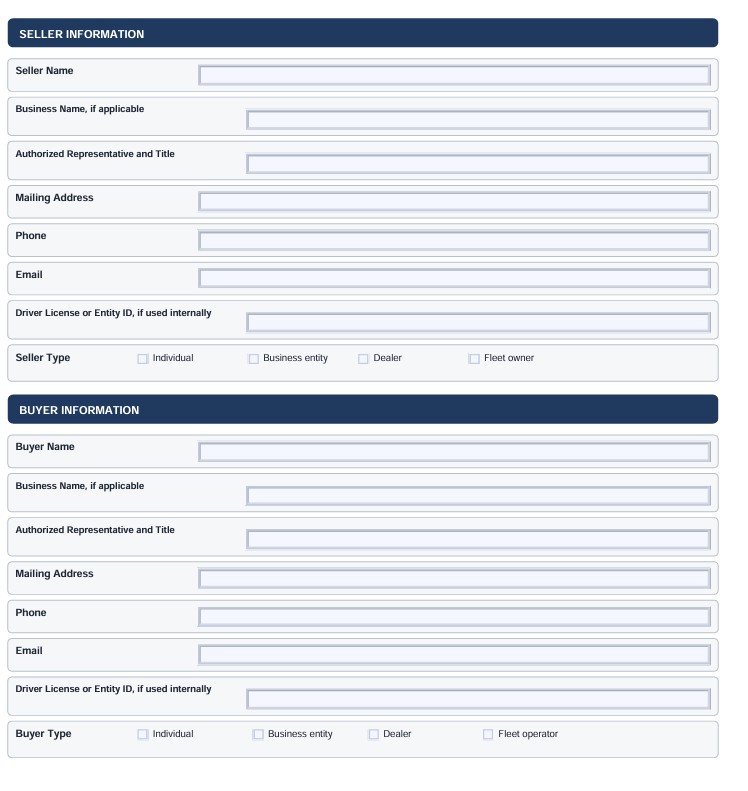
A truck bill of sale template is used to document the sale or transfer of a truck between a seller and a buyer in the United States. It creates a written record of the transaction, including the parties, truck details, sale price, payment terms, date of sale, odometer information, and signatures. This page provides downloadable Word and PDF versione of the template, along with practical guidance for completing and using the document. A truck bill of sale can be useful for private sales, business fleet disposals, used commercial truck purchases, and recordkeeping after a title transfer. However, it does not replace the vehicle title, DMV transfer forms, lien release documents, odometer disclosures, or state-specific registration requirements when those apply. Because motor vehicle rules vary by state, county, and transaction type, users should always verify the applicable requirements with the relevant state motor vehicle agency before relying on any template.
Download the Truck Bill of Sale Word Template
The Word format is useful when you want to edit the truck bill of sale freely before printing, sharing, signing, or adapting it to a specific private sale, dealership transaction, fleet sale, or business record.

Download the Truck Bill of Sale PDF Template
The PDF format is useful when you need a fixed-layout version of the document for printing, archiving, sharing with the buyer or seller, or keeping a signed copy with your vehicle sale records.
How to Complete and Use This Document
A truck bill of sale should be completed carefully because it records the essential facts of the transaction. Start by entering the full legal name, mailing address, phone number, and email address of both the seller and the buyer. If either party is a business, use the correct legal business name and include the authorized representative signing on behalf of the company. The date of sale should match the date ownership is actually transferred, unless the parties clearly state a different effective date.
The truck description should be detailed enough to identify the vehicle without confusion. Include the year, make, model, body type, color, Vehicle Identification Number, license plate number, title number if available, and current odometer reading. For a commercial truck, it may also be useful to include the gross vehicle weight rating, unit number, engine type, mileage status, and any major equipment included with the sale, such as a liftgate, sleeper cab, box body, refrigeration unit, dump body, or attached accessories. Always compare the VIN on the template with the VIN on the title and the VIN plate on the truck before signing.
The payment section should state the sale price in dollars, the payment method, and whether the amount is paid in full or subject to a remaining balance. If the buyer is paying by cashier’s check, wire transfer, installment arrangement, or trade-in, the document should describe those terms clearly. If the truck is sold with a deposit, the bill of sale should explain whether the deposit is refundable, when the remaining balance is due, and when possession will be delivered. For higher-value commercial trucks, both parties should consider using a secure payment method and confirming funds before handing over the title, keys, and vehicle.
The condition and warranty language should be reviewed closely. Many private vehicle sales are documented as “as is,” meaning the buyer accepts the truck in its current condition, but the wording should be accurate and consistent with state law. The seller should not hide known defects, title problems, odometer issues, flood damage, salvage history, unpaid liens, or other material facts. The buyer should inspect the truck, review maintenance records, check the title status, confirm whether any lien must be released, and consider a mechanic’s inspection before signing.
Odometer and title requirements are especially important. Federal and state odometer disclosure rules may apply to many vehicle transfers, although exemptions can exist for certain older vehicles and some heavy trucks. The required odometer statement may need to be completed on the title, a secure state form, or another approved document rather than only on a general bill of sale. State DMV rules also vary on whether a bill of sale is required, optional, notarized, or submitted with title and registration paperwork. Some states provide their own official bill of sale or notice of sale form, and a custom template should not be used as a substitute when an official form is required.
Before using the document, both parties should review the completed form for blanks, mismatched names, incorrect VIN digits, unclear payment terms, and missing signatures. Each party should sign and keep a copy. If a notary public is required by state law, lender policy, company procedure, or the parties’ agreement, do not sign until the notary is present. Businesses selling fleet vehicles should also keep supporting records, such as board or manager approval, invoice, lien release, title copy, payment receipt, inspection report, and internal asset disposal documentation. For commercial trucks, the buyer may need to verify additional post-sale requirements, including registration, insurance, safety inspection, emissions rules, apportioned plates, carrier compliance, or tax obligations. When the transaction is high value, financed, interstate, or legally uncertain, it is wise to consult an attorney, CPA, licensed dealer professional, or the appropriate state motor vehicle agency before completing the sale.