
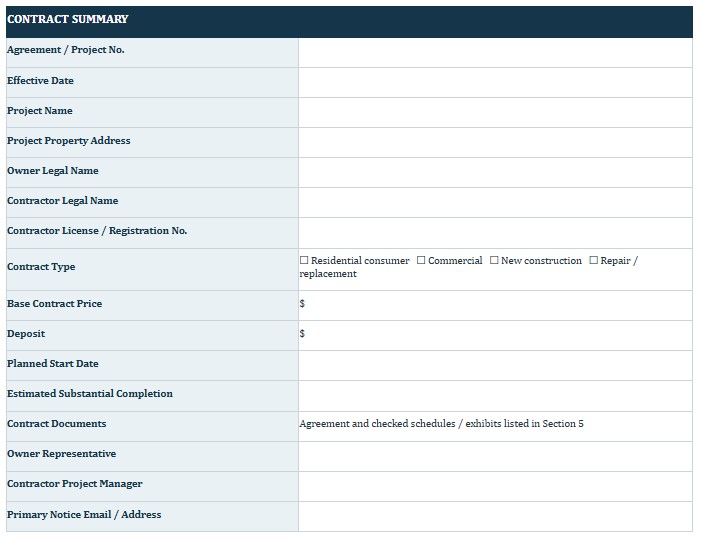
A Roofing Contract Agreement Template helps a property owner and roofing contractor define the terms of a roof installation, replacement, repair, or maintenance project before work begins. A detailed written agreement can clarify the roofing system to be installed, materials, labor responsibilities, project schedule, contract price, payment milestones, change-order procedures, warranties, permits, cleanup, insurance, and dispute procedures. It can be used for residential or commercial roofing work, but it should always be customized to the project and the laws that apply where the property is located. This page provides downloadable Word, and PDF versions of the Roofing Contract Agreement Template, together with practical guidance for completing and using the document. The Word version is suitable for editing the complete agreement, the PDF version provides a consistent layout for review and signing.
Download the Roofing Contract Agreement Word Template
The Word format is useful when the property owner or contractor needs to edit the agreement freely before printing, sharing, signing, or adapting it to a particular roofing system, property, construction project, insurance claim, or state-specific requirement.

Download the Roofing Contract Agreement PDF Template
The PDF format is useful for printing, archiving, sharing, signing, or providing the parties with a fixed-layout version of the agreement that preserves the approved wording and project information.
How to Complete and Use This Document
Begin by entering the complete legal names and contact information of the property owner and roofing contractor. The contractor information should include the business address, telephone number, email address, and license or registration number when required by the applicable jurisdiction. Identify the project property by street address, building name, roof section, unit number, parcel information, or another reference that prevents confusion. Also enter the agreement date, proposed start date, estimated completion date, and any proposal, work order, insurance claim, or project number connected to the work.
The scope of work should describe exactly what the contractor will provide. State whether the project involves inspection, temporary protection, repair, partial replacement, full tear-off, overlay, new construction, coating, flashing replacement, gutter work, ventilation improvements, or another roofing service. Identify the roof areas included and expressly list any areas excluded from the contract.
Describe the roofing system and materials in detail. Relevant information may include the manufacturer, product line, color, style, membrane type, thickness, insulation, cover board, underlayment, ice and water protection, fasteners, adhesives, flashing metals, sealants, ventilation products, gutters, downspouts, skylights, roof drains, edge metal, and accessories. When substitute materials are permitted, explain who may approve them and whether they can affect the contract price, appearance, warranty, or completion date.
Address removal and disposal of existing materials. The agreement should state the number of roofing layers expected to be removed, whether the contractor will provide containers, how landscaping and exterior surfaces will be protected, and who is responsible for debris removal and final cleanup. Include a procedure for concealed conditions such as deteriorated decking, damaged structural components, wet insulation, hazardous materials, inadequate ventilation, or code-related work that could not reasonably be identified before removal. Deck replacement and similar additional work can be priced by unit, hourly rate, written estimate, or signed change order.
Enter the total contract price and explain what it includes. Identify the deposit, progress payments, milestone payments, retainage when applicable, and final payment. Payment milestones should correspond to identifiable work, material delivery, inspections, or completion stages. Do not leave payment amounts, due dates, finance charges, allowances, taxes, permit fees, or exclusions unclear. State whether insurance proceeds, financing approval, mortgage-company procedures, or depreciation payments affect the owner’s payment obligation.
Use a written change-order procedure for modifications to the scope, materials, price, or schedule. A change order should describe the requested change, added or deducted cost, schedule impact, and approval of both parties before the changed work begins, except when immediate action is reasonably necessary to protect persons or property. Verbal instructions and informal text messages can create disputes when they are not incorporated into the project records.
Clarify responsibility for permits, building-code compliance, inspections, utility coordination, homeowner-association approval, and access to the property. Requirements vary among states, counties, and cities, so the parties should verify the current rules with the relevant licensing and building authorities. The agreement may also address working hours, electrical access, use of driveways, pets, landscaping, interior protection, satellite equipment, solar panels, and the owner’s duty to disclose known leaks or structural problems.
Review the insurance, safety, and subcontracting provisions. The contract may require evidence of commercial general liability, workers’ compensation, automobile coverage, bonds, or other protection appropriate to the project. State whether subcontractors may be used and which party is responsible for supervising them. Roofing work involves significant fall, weather, electrical, heat, and material-handling hazards. Site-safety responsibilities should be assigned consistently with applicable federal, state, local, and company requirements.
Define the warranties separately. A contractor workmanship warranty generally concerns installation, while a manufacturer warranty may concern eligible material defects or a specified roof system. State the duration, start date, covered remedy, exclusions, claim procedure, owner maintenance duties, transfer conditions, and circumstances that may affect coverage. Do not promise manufacturer coverage unless the project qualifies and the required documentation will actually be issued.
Include provisions addressing delays, severe weather, material shortages, suspension, termination, default, damage, dispute resolution, governing law, notices, attachments, and the entire agreement. Cancellation notices, deposit limits, mandatory contract language, mechanics lien warnings, consumer disclosures, and contractor licensing rules can vary substantially by jurisdiction. Certain transactions signed at a consumer’s home or another qualifying location may also be subject to federal or state cancellation rights, but not every roofing contract qualifies.
Before signing, remove unused options, complete every blank, attach the detailed proposal and specifications, and confirm that the contract is consistent with permits, plans, manufacturer requirements, insurance documents, and verbal commitments. Both parties should sign and date the final agreement and retain a complete copy together with change orders, invoices, payment receipts, lien releases, inspection reports, photographs, warranty certificates, and correspondence. A qualified construction attorney should review the form before it is adopted as a standard contract or used for a high-value, financed, insured, commercial, or legally complex roofing project.