
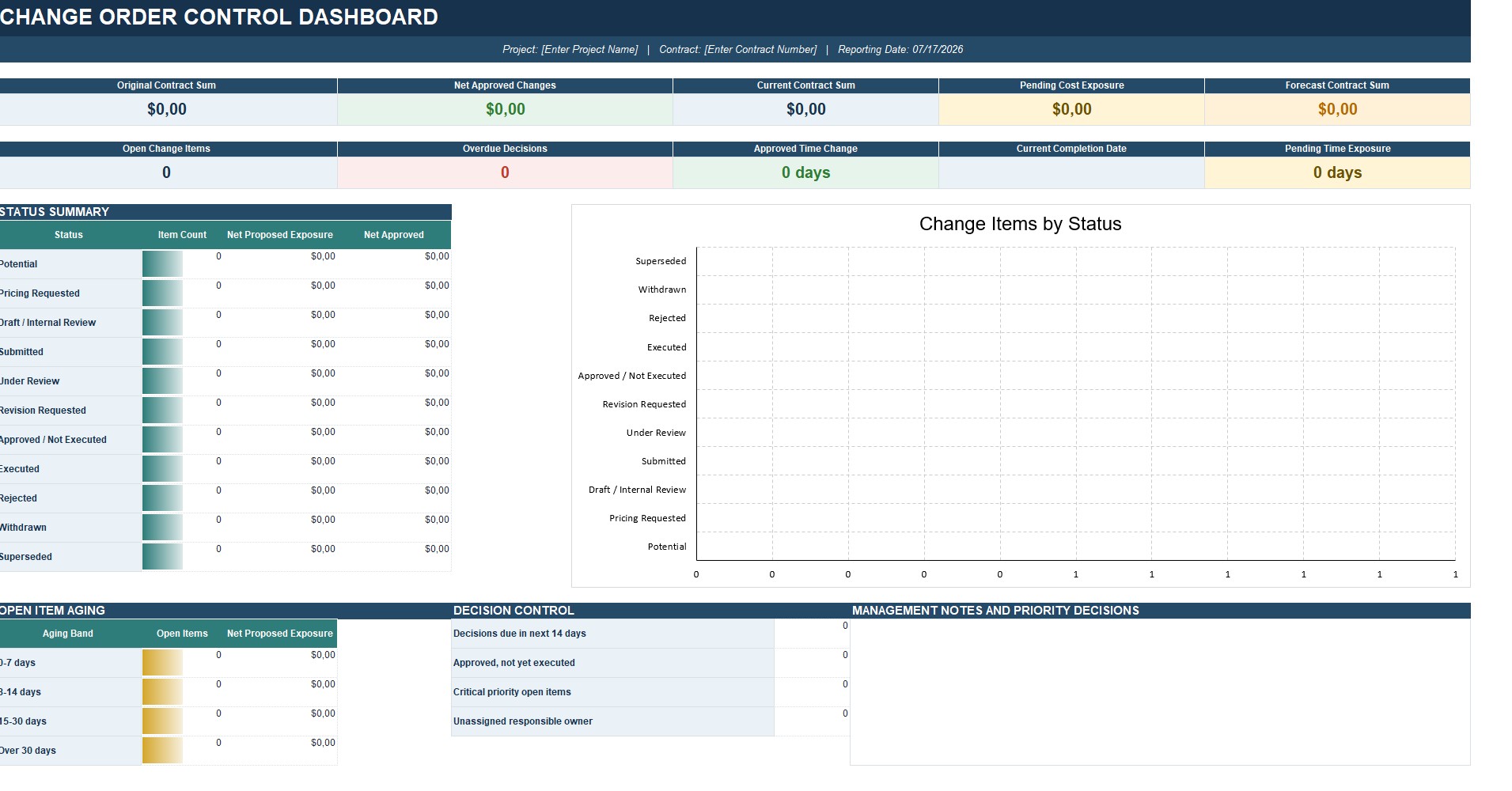
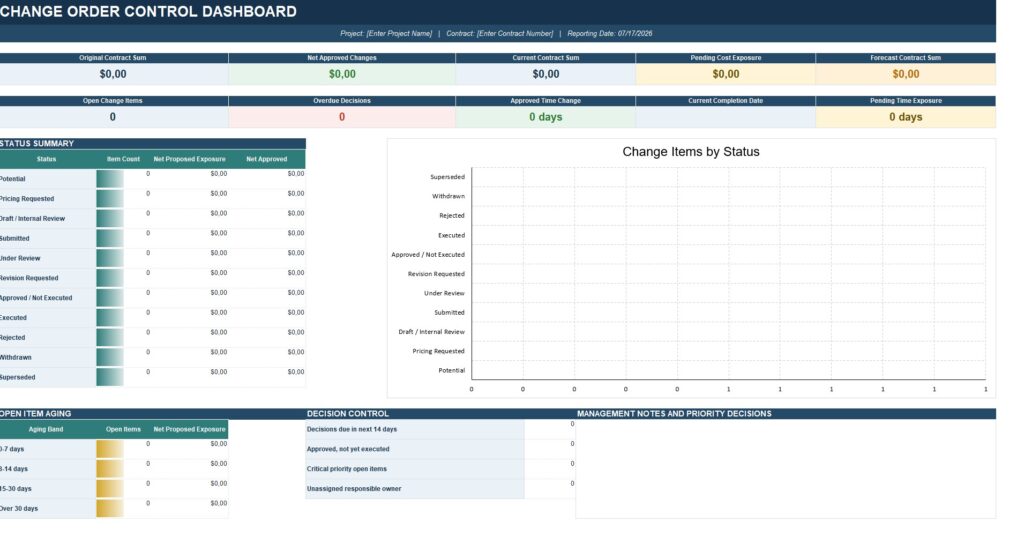
A Change Order Log Template provides a centralized record for tracking proposed, pending, approved, rejected, and completed changes to a construction contract or other project agreement. Contractors, owners, construction managers, architects, engineers, project administrators, and accounting teams commonly use this log to monitor changes in scope, price, contract time, approval status, and supporting documentation. Maintaining an accurate log can help prevent missed approvals, duplicate numbering, budget surprises, schedule disputes, and inconsistencies between field instructions, formal change orders, payment applications, and the current contract value. This page provides downloadable Word and Excel versions of the Change Order Log Template, together with practical guidance for completing, customizing, reviewing, and maintaining the record.
Download the Change Order Log Word Template
The Word format is useful when you need to edit headings, add company branding, modify approval fields, expand project details, or adapt the log to a particular contract before printing, sharing, signing, or including it in a project administration package.

Download the Change Order Log Excel Template
The Excel format is especially useful for a change order log because it supports repeatable rows, dates, status tracking, dollar amounts, additions, deductions, time extensions, responsible parties, and cumulative calculations. It can be updated throughout the project and filtered or sorted for reporting purposes.
How to Complete and Use This Document
Begin by entering the project identification information at the top of the log. This normally includes the project name, project number, property or jobsite address, owner, general contractor, architect or engineer, construction manager, original contract date, original contract amount, and the person responsible for maintaining the record. Use the same names, numbers, and terminology that appear in the executed contract and other project documents.
Assign each change a unique tracking number. A proposed change order, change request, construction change directive, field order, and fully executed change order may represent different stages or types of project documentation. The log should clearly identify which document is being tracked and should not treat an unapproved proposal as an authorized change. Use a consistent numbering system and avoid reusing numbers when an item is rejected, withdrawn, or superseded.
For every entry, record the date initiated, a concise description of the requested change, the party requesting or originating it, and the reason for the change. Common reasons may include owner-requested revisions, unforeseen site conditions, design clarifications, code-related revisions, substitutions, errors or omissions, allowance adjustments, or scope transfers. The description should be specific enough for a reviewer to understand the issue without relying only on informal conversations.
Identify the related contract documents and supporting records. These may include drawings, specifications, requests for information, architect’s supplemental instructions, field reports, photographs, estimates, subcontractor quotations, labor and material breakdowns, schedules, meeting minutes, correspondence, and written directives. Store these items in the project file and use consistent reference numbers so that each log entry can be traced to its supporting documentation.
Enter the proposed cost impact as an addition, deduction, or no-cost change. Keep the proposed amount separate from the final approved amount because pricing may change during review and negotiation. Where appropriate, document labor, materials, equipment, subcontractor costs, overhead, profit, taxes, insurance, bonds, credits, and other adjustments in the supporting change order package. Verify that pricing methods and markups are consistent with the contract.
Record any effect on contract time, milestones, sequencing, access, procurement, or substantial completion. A change may have no immediate price increase but still affect the schedule. Do not assume that a requested number of additional days has been approved. Track the proposed time adjustment separately from the final authorized adjustment and retain the supporting schedule analysis or written explanation.
Use a clearly defined status field, such as draft, pricing requested, under review, awaiting owner approval, approved, rejected, withdrawn, superseded, or completed. Record the dates on which pricing was requested, submitted, reviewed, negotiated, approved, and incorporated into the contract. Identify the responsible reviewer and the person with authority to approve the change.
Update the original contract amount by adding approved increases and subtracting approved credits. The log should distinguish pending exposure from executed changes and show the cumulative value of approved change orders. Reconcile the totals regularly with signed change orders, the contractor’s payment applications, the owner’s accounting records, contingency reports, and the current contract balance.
A change order log is an administrative tracking tool and does not ordinarily replace a signed change order, formal contract modification, or written directive required by the governing contract. Work should not be treated as authorized merely because it appears in the log. Review the contract’s notice, pricing, approval, documentation, and change authorization provisions before proceeding with changed work.
Customize the template to match the project delivery method, internal approval workflow, accounting system, and contractual terminology. Public projects, federally funded work, transportation projects, and government contracts may require agency-specific forms, authorization procedures, audit records, or formal modification documents. State and local rules may also affect licensing, procurement, public works administration, lien rights, payment, and record retention. Consult the project architect, engineer, construction manager, contract administrator, attorney, accountant, or other qualified professional when the authority, cost responsibility, schedule entitlement, or legal effect of a change is uncertain.