
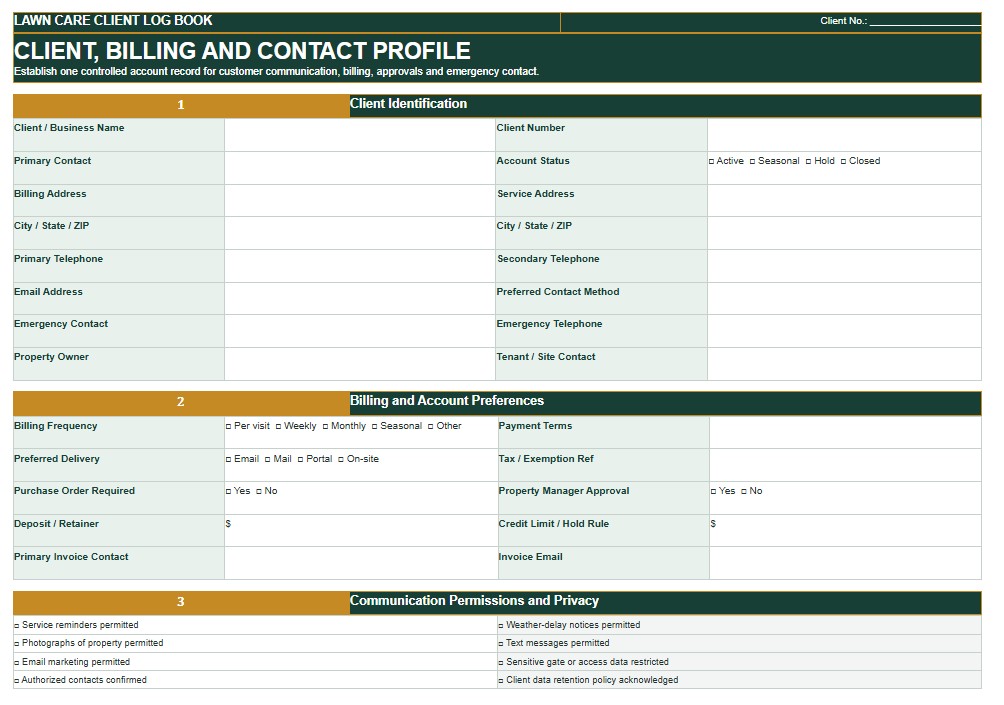
A Lawn Care Client Log Book provides a structured record of customers, service locations, scheduled visits, work completed, property conditions, materials used, crew assignments, customer instructions, payments, and follow-up needs. It can be used by lawn mowing companies, landscape maintenance contractors, sole proprietors, property managers, groundskeeping teams, and seasonal lawn care businesses. Maintaining a separate history for each client helps crews deliver consistent service, document changes in turf and landscape conditions, confirm authorized work, prepare invoices, resolve customer questions, and plan future visits. The log can also support business bookkeeping, equipment planning, pesticide or fertilizer records, and internal quality control. This page provides downloadable Word, PDF, and Excel versions of the Lawn Care Client Log Book, together with practical guidance for recording client information, documenting each service visit, tracking treatments and materials, protecting customer data, and adapting the template to company procedures and applicable federal, state, county, or city requirements.
Download the Lawn Care Client Log Book Word Template
The Word format is useful when you want to edit the document freely before printing, sharing, signing, or adapting it to a particular lawn care business. You can add company branding, service packages, crew instructions, property diagrams, customer approval fields, payment terms, or treatment records.

Download the Lawn Care Client Log Book PDF Template
The PDF format is useful for printing, archiving, sharing, or maintaining a fixed-layout version of the document in a service vehicle, crew folder, office file, property management record, or customer account folder.
Download the Lawn Care Client Log Book Excel Template
The Excel format is useful for repeatable service rows, customer lists, schedules, labor hours, materials, quantities, invoice amounts, payment status, treatment dates, equipment use, and recurring maintenance tasks. It also allows records to be filtered by client, property, crew, service type, date, or account status.
How to Complete and Use This Document
Begin by creating a client profile for each customer. Record the client’s full name or business name, billing address, service address, telephone number, email address, preferred contact method, and emergency contact when appropriate. Assign a unique client or account number so that service visits, estimates, invoices, payments, photographs, and correspondence can be traced to the correct property.
Describe the property before recurring service begins. Useful details include lot size, approximate turf area, grass type when known, slopes, gates, fences, irrigation zones, flower beds, trees, drainage areas, utility features, pet areas, play equipment, ponds, retaining walls, and any locations that require special care. Record access instructions, gate codes, parking limitations, preferred service days, noise restrictions, homeowner association rules, and areas that the client does not want serviced. Sensitive access information should be protected and made available only to authorized employees or contractors.
Define the approved scope of work. Identify whether the account includes mowing, edging, string trimming, blowing, leaf removal, hedge trimming, weed control, fertilization, aeration, overseeding, dethatching, irrigation checks, seasonal cleanup, mulch installation, or other services. Record the expected frequency, seasonal start and end dates, agreed price, billing method, payment terms, and services that require separate customer authorization. The log should support the service agreement, estimate, work order, or invoice rather than replace those documents.
Complete a service entry for every visit. Record the date, arrival and departure times, crew leader, employees or contractors present, weather, ground conditions, services performed, equipment used, materials applied, and areas completed. Note obstacles, standing water, excessive turf height, erosion, pest damage, irrigation problems, damaged plants, unsafe conditions, or work that could not be completed. A concise property condition note can help explain schedule changes, additional charges, or recommendations made to the client.
When mowing, record the approximate cutting height, mowing pattern when relevant, clipping disposition, and whether edging and cleanup were completed. Avoid removing excessive turf height in a single visit when doing so could damage the lawn. The appropriate mowing height and maintenance method depend on the grass species, season, climate, irrigation, turf condition, and local recommendations.
When fertilizers, herbicides, insecticides, fungicides, or other lawn treatment products are used, maintain more detailed application records. Depending on the product and jurisdiction, useful or required information may include the product name, EPA registration number where applicable, treatment area, target pest or condition, application rate, total quantity, date and time, weather, wind conditions, applicator name, certification or license number, equipment used, and customer notification. Commercial pesticide licensing, notification, posting, record retention, and reporting requirements vary considerably by state, tribe, county, and municipality. Always follow the product label and verify the current requirements of the responsible pesticide regulatory agency.
Do not use the client log as a substitute for safety records. Lawn and landscape work can involve rotating blades, flying debris, noise, fuel, vehicles, chemicals, heat, electrical hazards, traffic, slopes, and manual handling. Record safety concerns that affect the property visit, but maintain required employee training, hazard communication, personal protective equipment, injury, vehicle, and chemical records through the company’s formal safety program.
Include a customer communication section for instructions, complaints, service changes, approvals, and follow-up commitments. Record who communicated, when the communication occurred, what was requested, the employee responsible, and the completion status. Attach or reference photographs when they help document preexisting damage, completed work, blocked access, irrigation leaks, storm damage, or disputed conditions. Obtain appropriate permission before photographing private areas or people.
Track charges and payment information without storing unnecessary financial data. Record the invoice number, service amount, additional authorized charges, taxes when applicable, payment status, payment date, and balance due. A lawn care company may use any recordkeeping system suited to its business, but income and expenses should be recorded accurately and supported by invoices, receipts, bank records, payroll records, and other business documents.
Review client records periodically. Confirm contact details, service frequency, prices, access instructions, recurring complaints, treatment history, unpaid balances, equipment needs, and seasonal recommendations. Customize the template when the business needs route numbers, GPS references, crew productivity, subcontractor details, irrigation readings, plant inventories, pesticide records, sales tax fields, or property management approvals.
Consult an attorney, CPA, insurance professional, pesticide compliance specialist, agronomist, licensed applicator, or other qualified adviser when questions involve contracts, liability, worker classification, payroll, taxes, pesticide licensing, environmental restrictions, damaged property, chemical exposure, disputed services, large unpaid balances, or state-specific recordkeeping obligations.