
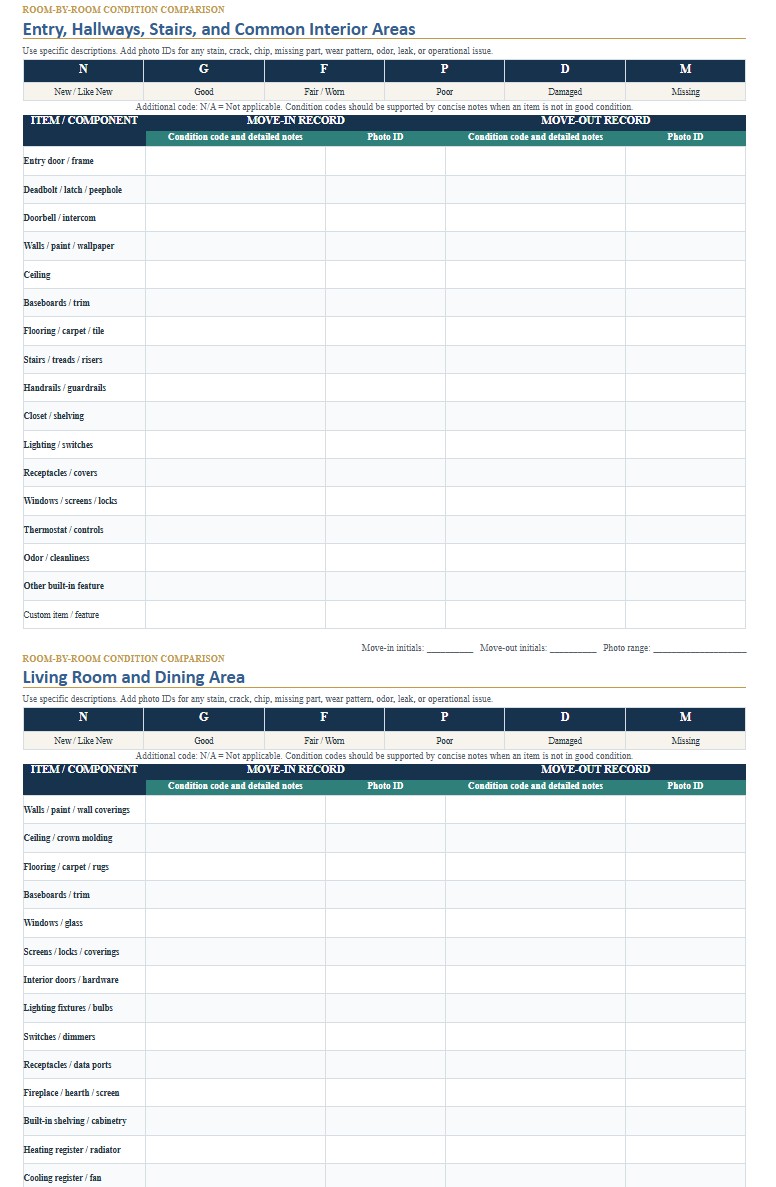
The Move In Move Out Inspection Checklist is a practical rental property form used to document the condition of a house, apartment, condominium, or other residential unit at the beginning and end of a tenancy. Landlords, property managers, tenants, leasing agents, and housing providers can use it to compare room-by-room conditions, record existing damage, identify maintenance issues, track keys and equipment, and support security deposit decisions. A detailed inspection record can reduce disagreements by showing which conditions existed before occupancy and which changes were present when possession was returned. This page provides downloadable Word, PDF, and Excel versions of the template together with practical guidance for completing and using the document. The Word version can be customized for a specific property, the PDF version provides a consistent layout for printing and archiving, and the Excel version supports repeatable entries, condition comparisons, repair tracking, dates, costs, and property management records.
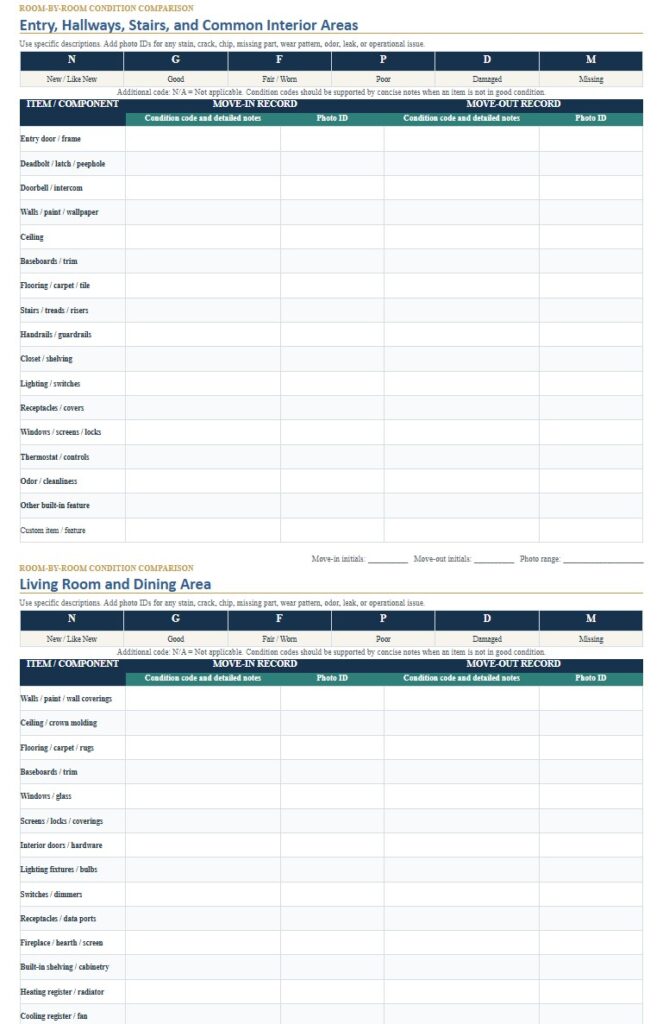
Download the Move In Move Out Inspection Checklist Word Template
The Word format is useful when you want to edit room categories, add landlord or property management information, include lease-specific items, expand the notes areas, or adapt the checklist to a furnished unit, single-family home, apartment, condominium, or vacation rental before printing, sharing, or signing it.

Download the Move In Move Out Inspection Checklist PDF Template
The PDF format is useful for printing, archiving, emailing, or maintaining a fixed-layout inspection record. It can be stored with the lease, photographs, repair invoices, security deposit documentation, notices, and other tenancy records.
Download the Move In Move Out Inspection Checklist Excel Template
The Excel format is useful for recording room-by-room conditions, move-in and move-out dates, repair items, responsible persons, estimated costs, key inventories, meter readings, photographs, and repeatable property records. It can also support sorting, filtering, status tracking, and comparisons across multiple units.
How to Complete and Use This Document
Begin by identifying the rental property and the parties clearly. Enter the full property address, unit number, landlord or property manager, tenant names, lease start and end dates, inspection dates, and the names of everyone present. Record whether the inspection is for move-in, move-out, a pre-move-out review, or another purpose. If a management company uses an internal property or tenant identification number, include it so the checklist can be matched to the correct lease and accounting records.
The move-in inspection should be completed as close as possible to the time possession is delivered. Walk through the unit systematically with the tenant when practical. Review each room and record the condition of walls, ceilings, floors, doors, locks, windows, screens, blinds, lighting, electrical outlets, plumbing fixtures, cabinets, counters, appliances, smoke alarms, carbon monoxide alarms, heating, cooling, and any furniture supplied with the unit. Exterior areas, garages, balconies, patios, storage spaces, yards, mailboxes, and common areas assigned to the tenant should also be included when applicable.
Describe existing conditions precisely. Instead of writing only “damaged,” record details such as a two-inch scratch on the living room floor near the entry door or a cracked refrigerator shelf. Note stains, holes, burns, chips, discoloration, missing hardware, odors, pest evidence, leaks, malfunctioning equipment, and incomplete cleaning. Distinguish cosmetic conditions from problems that may affect safety, habitability, or operation. Items requiring prompt repair should be reported through the landlord’s normal maintenance process rather than left only on the checklist.
Photographs and video can strengthen the written record. Label images by room, item, and date, and retain the original files when possible. Both parties should have access to the same supporting evidence. Record utility meter readings, fuel levels, parking permits, remotes, access cards, garage openers, and the number of keys issued. For furnished rentals, attach a detailed inventory showing furniture, linens, kitchenware, electronics, and other supplied property.
At move-out, use the same checklist and inspection sequence used at move-in. Compare the current condition with the original entry rather than evaluating the unit from memory. Record cleaning, missing items, unauthorized alterations, broken fixtures, appliance condition, damage, and repairs that may be needed. Note the date possession was returned, the final meter readings, and every key or access device received from the tenant.
The checklist should distinguish damage from ordinary wear associated with normal use. This distinction can affect whether a cost may lawfully be deducted from a security deposit, but the meaning and treatment of normal wear can depend on state law, the age and expected life of the item, the length of the tenancy, and the surrounding facts. Avoid assigning charges solely because an item is no longer new. Document the actual condition, supporting evidence, repair or replacement work, and the basis for any amount claimed.
Some states require a move-in statement of condition, give tenants a specific period to submit corrections, or provide a right to request or attend a pre-move-out inspection. Security deposit deadlines, permitted deductions, itemized statements, receipts, estimates, interest, and delivery methods also vary significantly. The template does not establish a universal deadline or replace a notice required by state or local law. Before using it, verify the current landlord-tenant requirements for the state, county, and city where the property is located.
Both the landlord or representative and the tenant should review the completed form, add disagreements or comments, and sign and date it. A signature should confirm receipt and the recorded observations, not force either party to waive rights provided by law or the lease. Each party should receive a complete copy, including attachments and photographs. If one party declines to sign or attend, document that fact and the method used to provide the completed record.
Customize the checklist when the property includes special features such as a pool, fireplace, septic system, solar equipment, smart-home devices, accessibility equipment, security systems, furnished rooms, or homeowner association facilities. Retain the move-in and move-out versions with the lease, maintenance requests, correspondence, invoices, estimates, deposit accounting, and proof of delivery according to applicable law and company recordkeeping procedures. Consult a qualified landlord-tenant attorney or property management professional when there is substantial damage, a disputed security deposit, possible habitability concerns, an abandoned unit, or uncertainty about required notices and inspection procedures.