
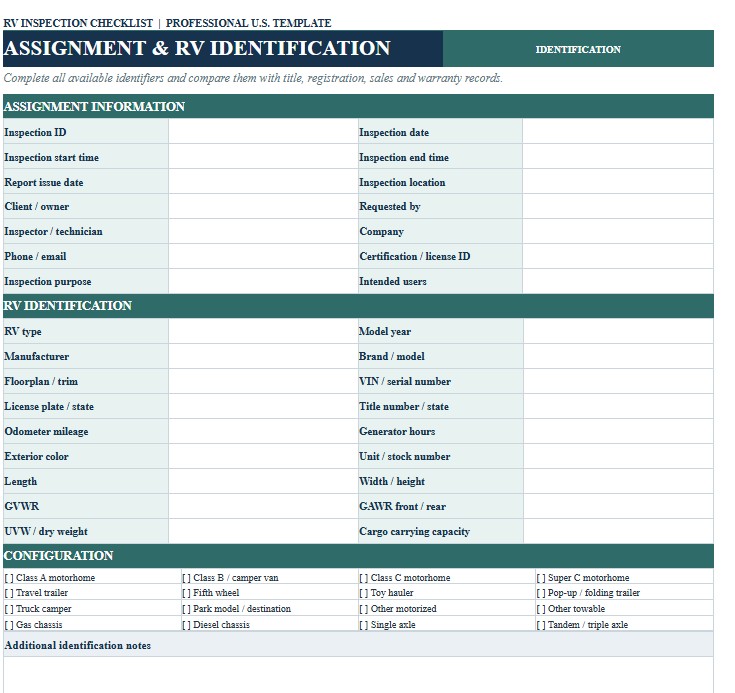
An RV Inspection Checklist provides a structured way to evaluate a motorhome, travel trailer, fifth wheel, camper van, truck camper, toy hauler, or other recreational vehicle. Buyers, owners, sellers, rental operators, dealers, technicians, and professional RV inspectors can use the checklist to document the condition of the chassis, body, roof, slide-outs, tires, electrical systems, plumbing, propane equipment, appliances, safety devices, and interior components. It is particularly useful before purchasing a used RV, accepting delivery of a new unit, beginning a trip, ending a rental, or planning seasonal maintenance. This page provides downloadable Word, PDF, and Excel versions of the RV Inspection Checklist, together with practical guidance for completing and using the document. The Word version supports detailed customization, the PDF version provides a consistent printable layout, and the Excel version can help track findings, repair priorities, estimated costs, service records, responsible parties, and follow-up dates.
Download the RV Inspection Checklist Word Template
The Word format is useful when a buyer, owner, inspector, dealer, or rental operator wants to edit the checklist freely before printing, sharing, signing, or adapting it to a particular RV type, inspection purpose, company procedure, or equipment configuration.

Download the RV Inspection Checklist PDF Template
The PDF format is useful for printing, archiving, emailing, or using a fixed-layout checklist during a pre-purchase evaluation, delivery inspection, rental turnover, maintenance appointment, or trip preparation review.
Download the RV Inspection Checklist Excel Template
The Excel format is useful for recording repeatable inspection rows, vehicle information, dates, mileage, generator hours, condition ratings, defects, repair estimates, service providers, completion dates, maintenance schedules, and inspection histories for one or more recreational vehicles.
How to Complete and Use This Document
Begin by identifying the recreational vehicle and the purpose of the inspection. Enter the manufacturer, model, model year, RV type, vehicle identification number, license plate, mileage, generator hours, seller or owner, inspection date, inspector, and location. For a motorhome, record both coach and chassis information when available. For a towable RV, include the trailer identification, gross vehicle weight rating, axle information, hitch type, and tow-vehicle details when the inspection includes towing compatibility.
Define the scope before checking individual components. State whether the inspection is for a pre-purchase decision, new-unit delivery, annual maintenance, rental turnover, trip preparation, warranty review, or investigation of a specific problem. Record weather conditions, utility connections, areas that could not be accessed, systems that could not be operated, and any limitations caused by storage, winterization, missing fuel, discharged batteries, unavailable shore power, or owner restrictions. Never mark a system satisfactory when it was not actually observed or tested.
Inspect the exterior from top to bottom. Examine the roof covering, seams, sealants, vents, skylights, antennas, air-conditioning units, solar equipment, ladders, awnings, windows, doors, storage compartments, exterior walls, trim, lights, steps, and slide-out seals. Look for cracks, gaps, loose components, corrosion, soft areas, staining, delamination, previous repairs, and evidence of water intrusion. Roof access can involve a serious fall hazard, so use a safe observation method and avoid climbing onto a roof that is wet, icy, damaged, fragile, excessively steep, or not designed to be walked on.
Check the underbody, frame, axles, suspension, leveling equipment, stabilizers, hitch, coupler, safety chains, breakaway switch, wiring connector, landing gear, and visible brake components. Inspect each tire for damage, uneven wear, inflation concerns, load rating, and manufacturing date code. Tire appearance alone does not establish remaining service life. Compare tire condition and specifications with the RV manufacturer’s information and obtain professional advice when age, cracking, loading, or prior storage creates uncertainty.
For motorized RVs, inspect applicable engine fluids, belts, hoses, batteries, steering, brakes, warning indicators, mirrors, windshield, wipers, lights, seat belts, and emergency equipment. A road test may reveal steering pull, vibration, abnormal noise, transmission concerns, braking problems, or warning lights that are not apparent while parked. A road test should be performed only by an authorized, properly licensed driver under safe conditions.
Evaluate the 120-volt and 12-volt electrical systems separately. Record the condition of the shore-power cord, inlet, distribution panels, circuit breakers, fuses, converter, inverter, house batteries, chassis battery, generator, solar controller, outlets, lighting, and major electrical appliances. Test ground-fault circuit interrupter protection where applicable. Electrical panels, damaged wiring, high-voltage equipment, lithium battery systems, and generators should be examined by qualified personnel when specialized testing or energized access is required.
Inspect the plumbing system for leaks and proper operation. Check the fresh-water tank, city-water connection, pump, fixtures, water heater, drains, toilet, gray-water system, black-water system, valves, holding tanks, vents, exterior shower, winterization fittings, and visible piping. Record moisture, odors, slow drainage, pump cycling, damaged seals, loose fittings, or signs that freezing may have caused hidden damage.
Review the propane system, cylinders or tank, regulator, hoses, piping, compartment, shutoff devices, and propane-operated appliances. Do not use an open flame to search for leaks. Pressure tests, leak tests, regulator evaluation, combustion analysis, and repairs should be performed using appropriate equipment by a qualified RV service professional or propane technician.
Operate the refrigerator, furnace, air conditioners, water heater, range, oven, microwave, ventilation fans, generator, leveling system, slide-outs, awnings, and other installed equipment when utilities and conditions permit. Record the energy source used for each test and allow enough operating time to evaluate performance. Confirm that smoke, carbon monoxide, and propane alarms are present where applicable, within their indicated service life, and responsive to their test controls. Inspect the fire extinguisher and emergency exits without representing a simple visual check as a complete safety certification.
Inside the RV, inspect ceilings, walls, floors, cabinets, furniture, windows, doors, seals, beds, upholstery, appliances, and storage areas. Pay particular attention to stains, soft flooring, musty odors, corrosion, swollen wood, damaged wall panels, and other moisture indicators. Water intrusion can exist behind finished surfaces, so unexplained evidence should be evaluated by a qualified inspector using appropriate methods.
For a purchase inspection, compare the checklist with the title, registration, maintenance records, warranty documents, invoices, manuals, vehicle history information, and available recall information. Verify the VIN directly on the vehicle rather than relying only on an advertisement or sales document. A history report does not replace an independent physical inspection, and a dealer inspection or certification does not guarantee that every mechanical, structural, electrical, or living-system defect has been identified.
Assign a unique finding number to every defect. Describe the component, exact location, observed condition, test result, severity, recommended action, photograph reference, responsible professional, and estimated cost when available. Mark items as satisfactory, monitor, repair recommended, urgent, not inspected, or not applicable. Separate safety-related defects from cosmetic concerns and routine maintenance.
Complete the summary, signatures, and acknowledgment fields required by the parties or organization. Retain the checklist with photographs, repair estimates, service records, warranty documents, recall records, and proof of completed work. Registration, emissions testing, vehicle inspection, licensing, weight, towing, rental, and sale requirements vary by state and sometimes by county or city. Check the current requirements of the applicable motor vehicle agency and consult a qualified RV inspector, RV technician, mechanic, electrician, propane professional, attorney, insurer, lender, or other specialist when the inspection will support a purchase, legal dispute, insurance claim, warranty decision, or safety determination.