
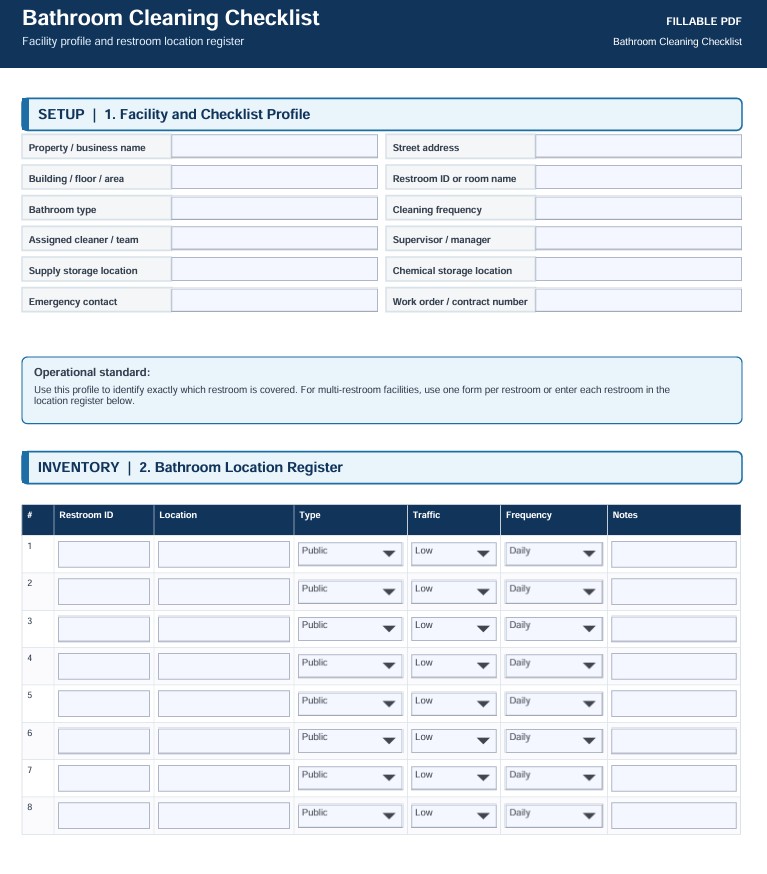
A bathroom cleaning checklist is a practical template used to organize, document, and standardize cleaning tasks for restrooms, bathrooms, shower areas, locker rooms, guest bathrooms, public facilities, rental units, offices, schools, hospitality properties, and commercial buildings. In the United States, this type of checklist is commonly used by homeowners, landlords, property managers, janitorial companies, facility teams, short-term rental hosts, childcare operators, restaurants, healthcare offices, and businesses that need consistent sanitation routines and reliable cleaning records. The template helps track surfaces cleaned, high-touch areas disinfected, supplies restocked, trash removed, fixtures inspected, safety issues reported, and responsible staff initials. This page provides downloadable Word, PDF, and Excel versions of the bathroom cleaning checklist, together with practical guidance for completing, customizing, printing, archiving, and using the document as part of a household, business, rental, or facility cleaning procedure.
Download the Bathroom Cleaning Checklist Word Template
The Word format is useful when you want to edit the bathroom cleaning checklist freely before printing, sharing, signing, or adapting it to a specific home, workplace, restroom schedule, cleaning company procedure, rental property, or facility requirement.

Download the Bathroom Cleaning Checklist PDF Template
The PDF format is useful for printing, posting inside a restroom supply area, archiving completed cleaning records, sharing with staff, or using a fixed-layout version for daily, weekly, or inspection-based bathroom cleaning routines.
Download the Bathroom Cleaning Checklist Excel Template
The Excel format is useful when the checklist contains repeatable rows, cleaning schedules, employee assignments, restroom locations, inspection dates, supply inventory, corrective actions, recurring tasks, supervisor review, or multi-site tracking.
How to Complete and Use This Document
Start the bathroom cleaning checklist by identifying the location being cleaned. Useful fields include property name, business name, address, building, floor, restroom number, bathroom type, date, shift, cleaning frequency, assigned employee, contractor name, and supervisor or manager. For businesses, schools, rental properties, hotels, restaurants, medical offices, and public facilities, location details are important because several restrooms may have different traffic levels, fixtures, supplies, and cleaning schedules. A checklist that clearly identifies the area makes the record easier to review later if there is a complaint, inspection issue, slip hazard, maintenance request, or supply problem.
List the cleaning tasks in a sequence that matches the actual workflow. A practical bathroom cleaning checklist usually includes removing trash, replacing liners, restocking toilet paper and paper towels, refilling soap or sanitizer dispensers, cleaning mirrors, wiping counters, cleaning sinks and faucets, cleaning toilets and urinals, cleaning shower areas where applicable, disinfecting high-touch surfaces, wiping door handles, light switches, grab bars, partition latches, flush handles, dispensers, and baby changing stations, sweeping and mopping floors, checking floor drains, and inspecting odors, leaks, damage, clogs, broken fixtures, graffiti, and supply shortages. For home use, the checklist can be simpler. For commercial restrooms, it should be detailed enough to show what was actually completed.
Distinguish cleaning from disinfecting. Cleaning removes dirt, soap scum, residue, and visible soil from surfaces. Disinfecting is a separate step that uses an appropriate disinfectant to reduce germs on surfaces. In most cases, visibly dirty surfaces should be cleaned before disinfectant is applied, because dirt and residue can interfere with the product’s effectiveness. If a disinfectant is used, follow the product label for dilution, surface compatibility, contact time, ventilation, storage, and safe use. Do not mix cleaning chemicals unless the product label specifically allows it. Mixing bleach with ammonia, acids, or other incompatible chemicals can create dangerous fumes.
Include a section for safety checks and corrective actions. Bathrooms can create slip, trip, chemical, biological, and maintenance hazards. The checklist should allow the cleaner or inspector to report wet floors, broken tiles, loose grab bars, exposed sharp edges, poor ventilation, mold-like growth, backed-up drains, clogged toilets, damaged dispensers, missing signs, electrical concerns, pest evidence, or any condition that needs repair. If a problem is found, record the action taken, such as “wet floor sign placed,” “maintenance notified,” “toilet taken out of service,” “supplies restocked,” or “manager advised.” This creates traceability and helps prevent repeated issues from being ignored.
For workplaces, the checklist should match company procedures and employee safety requirements. Cleaning staff may need gloves, eye protection, ventilation, training on chemical labels, and access to Safety Data Sheets for hazardous cleaning products. Employers should make sure workers understand the products they use, where supplies are stored, and how to report chemical exposure, spills, injuries, or unsafe conditions. If the bathroom is in a healthcare, childcare, school, lodging, food service, senior care, public accommodation, or regulated facility, additional cleaning, sanitation, documentation, or inspection requirements may apply. These requirements can vary by state, county, city, health department, licensing agency, industry standard, employer policy, lease, or contract.
Customize the template before routine use. A small office may need a daily restroom checklist with initials and restocking fields. A restaurant may need opening, mid-shift, and closing checks. A short-term rental host may need turnover cleaning, photo documentation, supply verification, and guest-ready inspection. A janitorial company may need client name, work order number, employee ID, supervisor approval, and service notes. A gym or locker room may need separate shower, floor drain, bench, and odor-control sections. Keep completed checklists with cleaning records, maintenance tickets, inspection files, employee records, vendor invoices, and property management documents when appropriate. For high-risk facilities, recurring sanitation complaints, employee chemical exposure concerns, mold concerns, or potential legal disputes, consult a qualified cleaning professional, safety professional, attorney, insurer, local health department, or other relevant authority before relying on a generic checklist alone.