
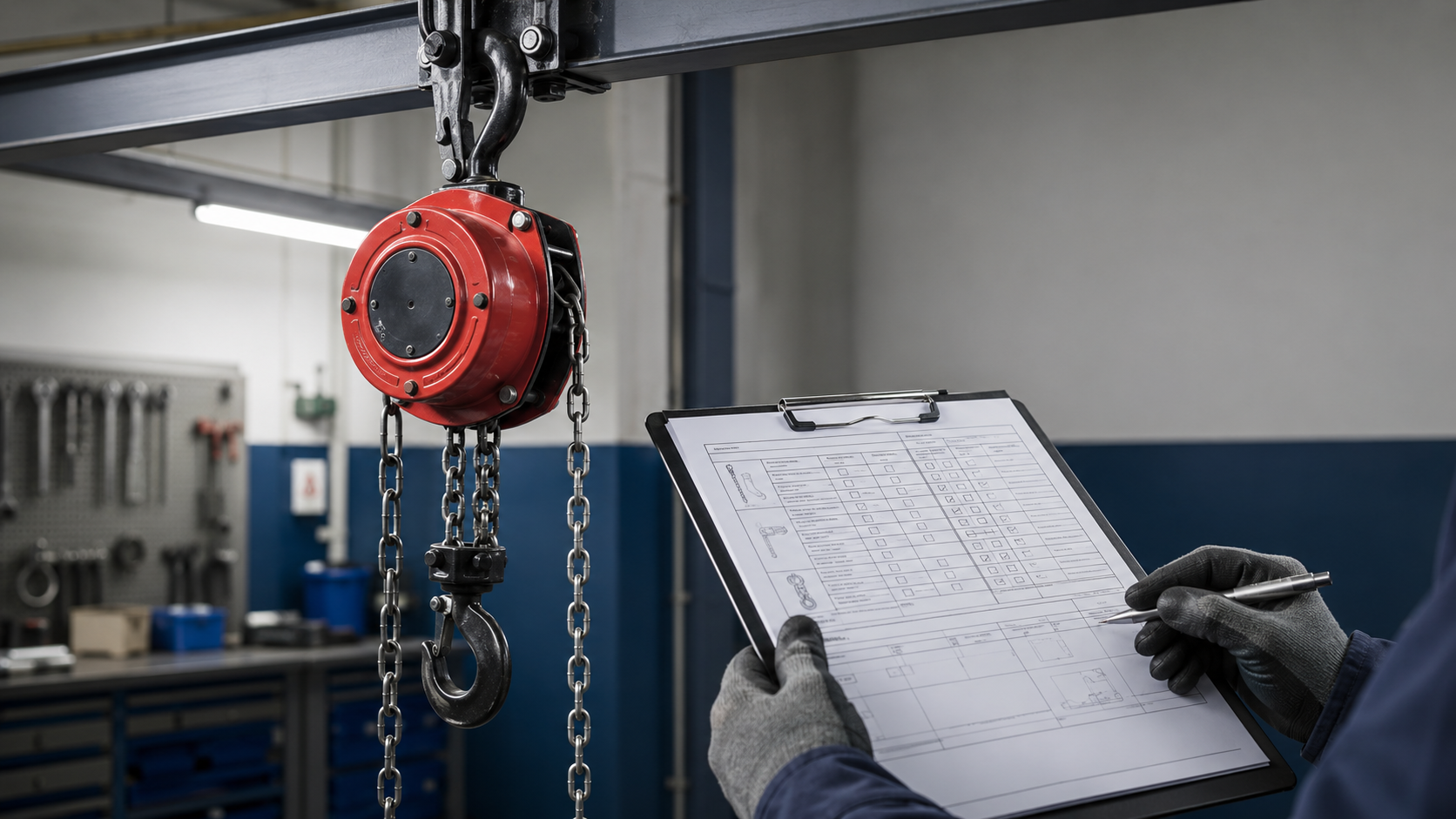
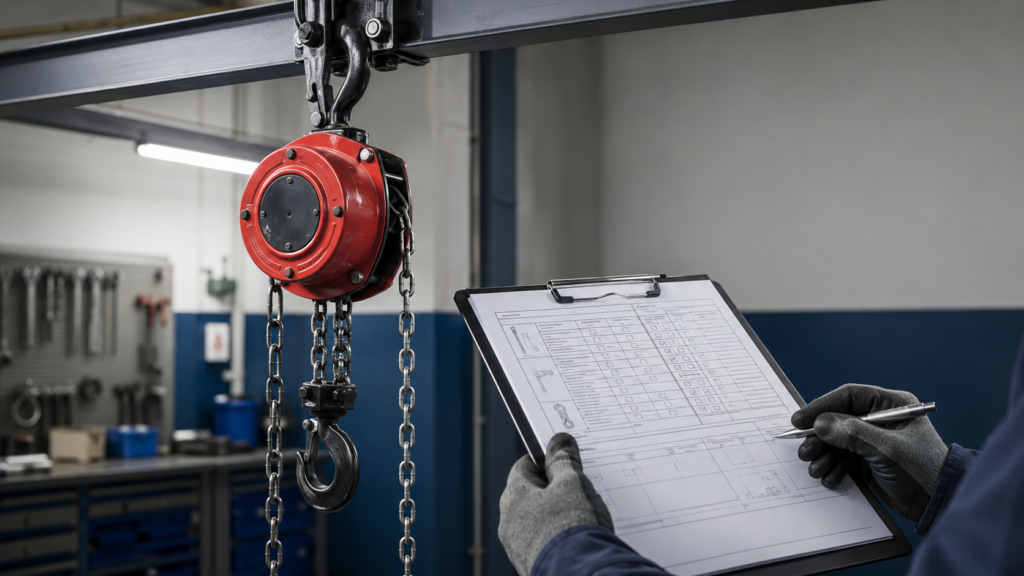
A chainfall inspection checklist provides a consistent way to document the condition of a manual chain hoist before it is used and during scheduled safety inspections. Maintenance teams, equipment operators, safety managers, contractors, and supervisors can use the checklist to identify damaged hooks, worn load chain, defective latches, brake problems, missing capacity markings, and other conditions that could make a lift unsafe. A properly completed checklist also creates a traceable record showing which chain fall was examined, who performed the inspection, what defects were found, and what corrective action was taken. This page provides downloadable Word, PDF, and Excel versions of the chainfall inspection checklist, together with practical guidance for completing and using the document. The template should be adapted to the manufacturer’s instructions, the equipment configuration, workplace procedures, service conditions, and any federal, state, local, or industry-specific requirements that apply to the operation.
Download the Chainfall Inspection Checklist Word Template
The Word format is useful when you want to edit inspection items, add company information, include equipment-specific acceptance criteria, or adapt the checklist to an internal safety program before printing, sharing, or approving it.

Download the Chainfall Inspection Checklist PDF Template
The PDF format provides a fixed-layout checklist that is convenient for printing, distributing to inspectors, sharing electronically, and archiving with maintenance and equipment records.
Download the Chainfall Inspection Checklist Excel Template
The Excel format is suitable for maintaining a repeatable inspection log containing multiple chain falls, inspection dates, equipment identifiers, findings, corrective actions, responsible employees, and return-to-service status.
How to Complete and Use This Document
Begin by identifying the company, facility, department, work area, and date of inspection. Record the chain fall’s manufacturer, model, serial number, asset number, rated capacity, lift height, and current location. Use an equipment identifier that matches the tag or nameplate attached to the hoist. If the nameplate or rated-capacity marking is missing or illegible, report the condition rather than estimating the capacity. The checklist should also identify whether the examination is a pre-use, frequent, monthly, periodic, post-repair, or return-to-service inspection.
Enter the inspector’s name and job title, and confirm that the person is trained or otherwise authorized under the employer’s program to perform the applicable level of inspection. A pre-use visual check is not necessarily equivalent to a detailed periodic examination. Inspection depth and frequency should be established from the manufacturer’s manual, service history, operating environment, frequency of use, severity of loading, applicable consensus standards, and workplace regulations.
Examine the entire hoist before operating it. Typical checklist items include:
- The identification plate, warning labels, rated capacity, and operating instructions are present and legible.
- The hoist body, covers, fasteners, suspension components, supporting structure, and trolley or beam attachment show no cracks, distortion, corrosion, looseness, or unauthorized modification.
- The upper and lower hooks have no cracks, bends, excessive twist, abnormal throat opening, heavy wear, gouges, or heat damage. Hook latches, when provided, close and operate properly.
- The load chain has no twisted, stretched, bent, cracked, corroded, gouged, worn, or distorted links. It should be properly reeved, seated in the chain wheel, and lubricated as directed by the manufacturer.
- The hand chain moves freely and has no damaged links, excessive wear, binding, or improper connections.
- The brake, gears, chain wheel, bearings, guides, stops, and other operating mechanisms function smoothly without slipping, sticking, grinding, or unusual noise.
Mark each item as satisfactory, defective, or not applicable. Do not rely on a simple check mark when a defect is present. Describe its exact location and condition, record relevant measurements, and identify the manufacturer’s limit or other approved acceptance criterion used. Photographs, measurements, repair orders, and service reports can be attached to improve traceability. Inspectors should not disassemble, adjust, weld, reshape, or repair components unless they are authorized and qualified to perform that work.
If conditions permit and company procedures authorize it, perform the operational checks specified by the manufacturer in a controlled area. Verify smooth lifting and lowering, proper chain travel, and brake operation without exposing anyone to a suspended load. A checklist does not authorize an unqualified person to conduct a proof-load test. Testing after installation, alteration, or repair should be performed only when required and under an approved procedure using appropriate equipment and personnel.
Any condition that may affect safe operation should be reported immediately. Mark the chain fall out of service, prevent further use, and follow the employer’s lockout, tagging, maintenance, and defect-escalation procedures. Record the defect, action taken, responsible person, repair date, replacement parts, and final disposition. The equipment should be returned to service only after required repairs, inspections, and approvals have been completed.
For chain hoists installed as part of an overhead or gantry crane covered by federal OSHA rules, inspection provisions can include frequent inspections at daily-to-monthly intervals and periodic inspections at one-to-twelve-month intervals. Covered crane hooks and hoist chains are subject to daily visual inspection, and OSHA specifies monthly certification records containing inspection dates, inspector signatures, and equipment identifiers for those components. Applicability depends on the equipment and workplace. Employers should verify current OSHA rules, an applicable OSHA-approved State Plan, manufacturer instructions, recognized hoist standards, project specifications, and company requirements. A safety professional, qualified hoist technician, engineer, or manufacturer should be consulted when the correct inspection scope or acceptance limit is uncertain.