
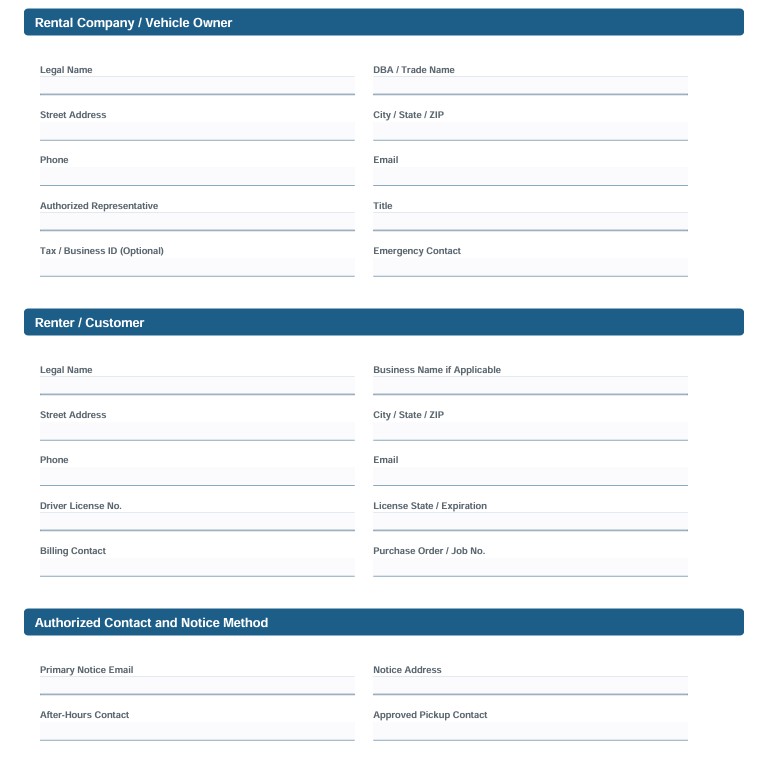
A truck rental agreement template is a written document used to record the terms under which a truck is temporarily rented by one party to another. In the United States, this type of template may be used for box trucks, pickup trucks, cargo vans, moving trucks, flatbeds, refrigerated trucks, dump trucks, tow trucks, or other commercial and noncommercial vehicles. A clear truck rental agreement helps define the renter, rental company or owner, vehicle details, rental period, mileage rules, payment terms, deposit, insurance, permitted use, driver requirements, fuel policy, damage responsibility, late return charges, inspection procedure, and return condition. This page provides downloadable Word and PDF versions of the truck rental agreement template, together with practical guidance for completing, reviewing, customizing, printing, signing, and keeping the document as part of a reliable rental record.
Download the Truck Rental Agreement Word Template
The Word format is useful when you want to edit the truck rental agreement freely before printing, sharing, signing, negotiating terms, or adapting it to a specific rental business, private rental, contractor use, moving truck rental, or commercial vehicle arrangement.

Download the Truck Rental Agreement PDF Template
The PDF format is useful for printing, archiving, sharing with the renter, keeping a fixed-layout signed copy, or storing the final rental record after the truck has been picked up and returned.
How to Complete and Use This Document
Start the truck rental agreement by identifying the parties. Enter the full legal name, address, phone number, and email address of the truck owner or rental company, and the full name and contact details of the renter. If the renter is a business, use the registered legal entity name and identify the person signing on its behalf. If additional drivers are allowed, list each authorized driver separately and record driver’s license number, issuing state, expiration date, age verification if required by company policy, and any commercial driver’s license information if the truck type or use requires it.
Describe the rental vehicle carefully. Include the year, make, model, body type, VIN, license plate number, registration state, unit number, color, odometer reading at pickup, fuel level at pickup, fuel type, gross vehicle weight rating if relevant, installed equipment, liftgate, refrigeration unit, trailer hitch, ramps, hand truck, straps, pads, GPS device, toll transponder, keys, documents, and accessories. The more precise the vehicle description is, the easier it is to resolve questions about mileage, missing equipment, damage, or return condition.
Complete the rental term and payment section with exact dates and amounts. The agreement should state the pickup date and time, return date and time, pickup location, return location, rental rate, mileage allowance, mileage charge, deposit, estimated charges, taxes, fees, cleaning charges, refueling charges, tolls, parking tickets, traffic violations, late return charges, and payment method. If the rental may be extended, explain how approval must be requested and how additional charges will be calculated. Avoid vague terms such as “return later” or “fees as needed,” because those phrases can create disputes.
The permitted use section should reflect the actual rental. A moving truck rented for household goods has different risk than a refrigerated truck, delivery truck, tow truck, construction truck, or commercial cargo vehicle. State whether the truck may be used for personal moving, business deliveries, local use, interstate travel, towing, commercial freight, construction work, event operations, or other specific purposes. The agreement should also describe prohibited uses, such as illegal cargo, unauthorized drivers, racing, off-road use, overloading, hazardous materials without authorization, carrying passengers outside designed seating, subrental, or operation outside the approved geographic area.
Insurance and damage responsibility should be reviewed before the truck leaves the lot. A rental business may offer optional protection products, but the renter may already have some coverage through an auto policy, business policy, employer policy, credit card, or other source. Coverage can vary by vehicle type, weight, business use, state law, and policy language, so the agreement should not assume coverage exists. The renter should verify insurance before pickup and the agreement should state whether liability coverage, physical damage protection, cargo coverage, deductibles, uninsured losses, and loss-of-use charges are the renter’s responsibility.
Use the inspection section at both pickup and return. Record the truck’s condition, mileage, fuel level, tire condition, lights, mirrors, windshield, body panels, cargo box, liftgate, interior, equipment, warning lights, and visible damage. Photos should be taken when practical, especially for scratches, dents, windshield chips, cargo area damage, missing accessories, tire damage, or pre-existing mechanical concerns. Both parties should sign or initial the condition report to reduce later disputes.
If the rented truck is used as a commercial motor vehicle, additional federal, state, and local requirements may apply. Depending on vehicle weight, cargo, interstate travel, motor carrier status, hazardous materials, passenger use, and business activity, the renter may need to consider USDOT registration, driver qualification, hours-of-service rules, inspection and maintenance rules, cargo securement, markings, permits, and proof that the rental agreement is carried in the vehicle when required. These requirements are fact-specific, so a generic template should be reviewed by a qualified fleet compliance professional or transportation attorney when the truck is used in regulated operations.
Customize the template for the rental setting. A short-term moving truck rental may focus on mileage, fuel, equipment, late return, and damage. A business rental may need purchase order numbers, insurance certificates, authorized drivers, jobsite use, maintenance reporting, and billing contacts. A refrigerated truck rental may need temperature unit checks and cargo responsibility language. A dump truck or flatbed rental may need payload, tarp, hydraulic system, and jobsite restrictions. Before signing, each party should review state law, county or city rules, company policy, insurance requirements, tax treatment, and any industry-specific regulation. For high-value rentals, accident claims, disputed damage, commercial operations, hazardous materials, or unusual risk, consult a qualified attorney, CPA, insurer, mechanic, rental compliance professional, or the appropriate public authority.