
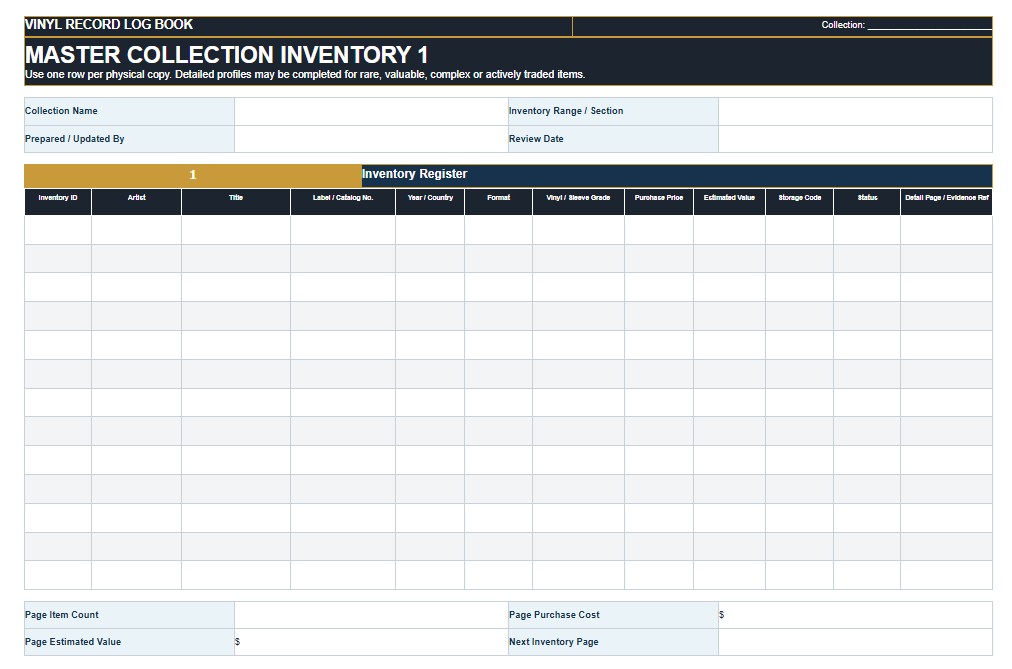
A Vinyl Record Log Book is a practical collection inventory used to document, organize, value, locate, and manage individual records. It can be used by private collectors, record dealers, DJs, libraries, archives, estate representatives, insurance policyholders, and anyone responsible for a physical music collection. A detailed log can distinguish similar pressings, track record and sleeve condition, preserve purchase information, identify storage locations, and provide supporting documentation if an item is sold, loaned, damaged, lost, or included in an insurance claim. This page provides downloadable Word, PDF, and Excel versions of the Vinyl Record Log Book, together with practical guidance for identifying releases, recording matrix and catalog information, applying a consistent condition grade, documenting purchase price and estimated value, attaching photographs and receipts, and maintaining an accurate collection history. The template can be customized for personal collections, retail inventory, DJ libraries, estate records, insurance inventories, or specialized archival projects.
Download the Vinyl Record Log Book Word Template
The Word format is useful when you want to edit the document freely before printing, sharing, or adapting it to a particular collection. You can add custom genres, grading definitions, ownership details, insurance fields, dealer information, photographs, or separate pages for rare and high-value records.

Download the Vinyl Record Log Book PDF Template
The PDF format is useful for printing, archiving, sharing, or maintaining a fixed-layout version of the collection record. Printed pages can be stored in a binder, used during physical inventory checks, or retained with photographs, purchase receipts, appraisals, and insurance documents.
Download the Vinyl Record Log Book Excel Template
The Excel format is useful for maintaining repeatable inventory rows, sorting records by artist or genre, calculating collection value, tracking purchase and sale amounts, filtering by condition or location, identifying duplicates, and reviewing the number of records owned by label, format, year, or pressing.
How to Complete and Use This Document
Begin by assigning a unique inventory number to each physical release. Do not rely only on the artist and album title because the same recording may exist in many pressings, reissues, colors, formats, countries, and packaging variations. The inventory number should remain attached to the same item throughout its ownership history, even when its storage location, condition, or estimated value changes.
Enter the primary artist, release title, label, catalog number, country, release year, format, record size, playback speed, and number of discs. Useful format details may include LP, EP, single, promotional copy, test pressing, picture disc, colored vinyl, boxed set, mono, stereo, limited edition, numbered edition, reissue, remaster, or club edition. Record information exactly as it appears on the labels, sleeve, spine, inserts, hype stickers, and other original components.
The catalog number is one of the most important identifiers, but it may not be sufficient to distinguish one pressing from another. Examine the matrix or runout area near the center label and record the etched or stamped characters for each side. Preserve spaces, symbols, initials, pressing-plant marks, and other visible identifiers as accurately as possible. Also enter the barcode, pressing plant, edition number, series, rights society, distributor, or other identifier when available. A reference number from a recognized music database may be recorded as an additional aid, but it should not replace the physical details observed on the record.
Grade the vinyl and the outer sleeve separately. A record may have a clean disc but a damaged cover, or the reverse. Select one recognized grading scale and use it consistently throughout the log. Common grades include Mint, Near Mint, Very Good Plus, Very Good, Good, Fair, and Poor. Add a written condition note describing visible marks, groove wear, warping, surface noise, skips, writing, seam splits, ring wear, stains, fading, stickers, cutouts, water damage, missing inserts, or replacement sleeves. Do not assign a high grade based only on appearance when playback defects are known.
Document all included components, such as the original inner sleeve, lyric sheet, poster, booklet, download card, obi strip, promotional insert, photograph, sticker, or numbered certificate. Missing or substituted components can materially affect collector interest and value. Note whether the record has been cleaned, professionally restored, play-tested, or placed in replacement archival sleeves, but do not describe restoration as original condition.
Record the purchase date, seller, purchase location, purchase price, shipping cost, sales tax, and source of funds when that information is relevant. Keep the original receipt, invoice, auction record, or electronic order confirmation and connect it to the inventory entry through a document reference. For gifts, inherited records, and items acquired in bulk lots, state the acquisition method and explain how any allocated cost was determined.
An estimated value should include the valuation date and the source or method used. Asking prices do not necessarily represent completed sales, and the value of a specific copy depends on pressing details, completeness, demand, authenticity, and condition. Update higher-value records periodically and avoid presenting an informal estimate as a professional appraisal. A qualified appraiser may be appropriate for rare records, extensive collections, estate administration, charitable contributions, lending arrangements, disputes, or insurance scheduling.
Enter the exact storage location using a consistent system, such as room, shelving unit, section, crate, bin, or box number. Store records vertically and avoid excessive leaning, tight packing, direct sunlight, high heat, moisture, and abrupt environmental changes. Handle discs by the edges and center label, keep surfaces clean, and use suitable inner and outer sleeves. Separate any record showing mold, moisture damage, or contamination until it can be evaluated safely.
Photograph the front cover, back cover, labels, inserts, matrix details, condition issues, and any unique features of valuable items. Keep a backup of the log and images in a secure location separate from the collection. A detailed inventory with purchase information, photographs, receipts, and appraisals can assist an insurer in evaluating a claim, but coverage limits and treatment of collectibles vary by insurer and policy. Review the collection with an insurance professional when its value may exceed ordinary personal-property limits.
Update the log when a record is purchased, sold, traded, gifted, loaned, damaged, lost, or moved. For sales, record the buyer or sales channel, date, selling price, fees, shipping cost, and disposition status. Dealers and other businesses should coordinate inventory valuation, cost basis, income reporting, sales tax, and record retention with their CPA, bookkeeper, attorney, or tax professional. Requirements may vary according to the business structure, state, locality, and type of transaction.