
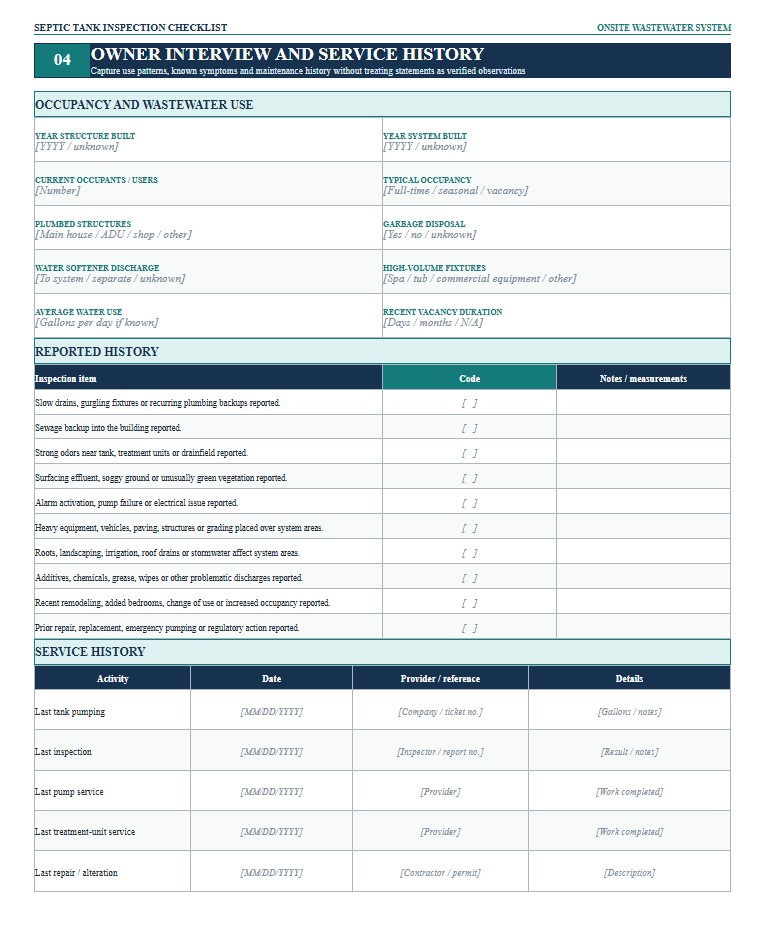
A Septic Tank Inspection Checklist provides a structured record for evaluating the visible condition, operation, and maintenance needs of a residential or commercial onsite wastewater system. It can be used by septic service providers, property owners, facility managers, home inspectors, buyers, sellers, and real estate professionals to document system identification details, tank conditions, liquid and solids levels, pumps, alarms, distribution components, drainfield observations, defects, and recommended corrective actions. A thorough inspection can reveal warning signs such as leakage, damaged components, sewage backups, standing water, unusual odors, or uneven wastewater distribution. This page provides downloadable Word, PDF, and Excel versions of the checklist, together with practical guidance for completing, customizing, reviewing, and retaining the document. Because septic inspection standards and reporting requirements can vary by state, county, municipality, lender, and type of property transaction, users should confirm the rules that apply in their location.
Download the Septic Tank Inspection Checklist Word Template
The Word version is useful when you need to edit the checklist freely before printing, sharing, signing, or adapting it to a particular property, septic system design, inspection company, or local reporting procedure. You can add branding, revise inspection categories, expand the findings section, and include property-specific notes or attachments.

Download the Septic Tank Inspection Checklist PDF Template
The PDF version is suitable for printing, archiving, sharing with property owners or transaction participants, and using a consistent fixed-layout inspection form. It is particularly useful when the checklist must retain the same appearance across different computers, printers, and recordkeeping systems.
Download the Septic Tank Inspection Checklist Excel Template
The Excel version is useful for maintaining repeatable inspection rows, recording dates and measurements, tracking multiple properties or system components, assigning corrective actions, monitoring due dates, and filtering inspection results. It can also support an ongoing service history when inspections, pumping, repairs, and follow-up visits occur over time.
How to Complete and Use This Document
Begin by recording enough identification information to connect the checklist to the correct property and onsite wastewater system. Enter the property address, parcel or permit number when available, owner or requester name, inspection purpose, date, weather conditions, and the name and contact details of the inspector or septic service company. Where state or local rules require an approved, certified, or licensed inspector, include the applicable credential or license number. Identify whether the inspection concerns routine maintenance, a property sale, a lender request, a reported malfunction, a repair evaluation, or another specific purpose.
Describe the system using available permits, installation plans, as-built drawings, pumping receipts, repair invoices, and prior inspection reports. Important entries may include the system type, approximate installation date, septic tank material and capacity, number of compartments, treatment units, pump chamber, distribution method, drainfield type, and any known design flow or occupancy assumptions. Do not guess when records are unavailable. Mark the information as unknown and explain how the system was located or identified. Local health department records may help establish the approved location and configuration of the system.
Document each component that was actually observed. Typical checkpoints include the building sewer, access lids, risers, tank structure, inlet and outlet connections, baffles or sanitary tees, effluent filter, pump chamber, floats, electrical controls, alarms, distribution box, conveyance piping, and soil absorption area. Note whether lids are secure, components are accessible, and visible surfaces show cracks, corrosion, leakage, settlement, root intrusion, deterioration, or unauthorized alterations. Record liquid level observations, sludge depth, scum thickness, and the measuring method used. Septic professionals commonly examine solids levels and check for leakage, backup staining, damaged inlet or outlet components, standing water in the drainfield, and uneven distribution through the distribution box.
For the drainfield assessment, record observations such as ponding, surfacing wastewater, sewage odors, unusually green or spongy vegetation, erosion, soil saturation, vehicle traffic, structures, pavement, deep-rooted plants, roof drainage, sump discharge, or other conditions that could interfere with treatment. A visual checklist cannot always establish the underground condition or remaining service life of the absorption area. Clearly identify any areas that were inaccessible, covered, frozen, flooded, unsafe, or excluded from the inspection.
Use the findings and corrective-action sections to distinguish between satisfactory conditions, maintenance items, defects requiring further evaluation, and apparent failure indicators. Describe the location and severity of each issue, the recommended response, the responsible party when known, and a reasonable follow-up date. Attach photographs, sketches, laboratory results, pumping documentation, receipts, or contractor estimates when they help explain the finding. Avoid stating that a system complies with all laws unless the inspector has completed the procedures required by the applicable authority and is authorized to make that determination.
Septic tanks and related chambers can contain toxic gases, unstable surfaces, biological hazards, electrical equipment, and fall hazards. Property owners should not enter a tank or attempt technical internal inspections. Opening, pumping, testing, or repairing the system should be handled by qualified professionals using appropriate safety procedures and equipment. Alternative systems that contain pumps, float switches, treatment devices, or mechanical components may require more frequent professional inspection than a conventional gravity system.
Before signing the checklist, review all dates, measurements, component descriptions, photographs, limitations, and corrective recommendations for consistency. The inspector should sign and date the record, and the property owner, customer, buyer, seller, or manager may acknowledge receipt when appropriate. Keep the completed checklist with permits, pumping records, maintenance reports, and repair documents so future inspectors can trace the system history. EPA guidance emphasizes retaining maintenance records and documenting work performed.
This template is a general inspection and recordkeeping tool, not a substitute for an official state or local inspection form. Some jurisdictions regulate inspector qualifications, inspection methods, property-transfer reports, pumping procedures, repair permits, submission deadlines, and filing with a health department or other authority. Mortgage lenders, insurers, homeowner associations, and commercial operators may impose additional requirements. Confirm the current federal, state, county, city, tribal, industry, and company-specific rules before relying on the checklist for a regulated inspection, real estate closing, permit application, wastewater discharge matter, or system certification.