
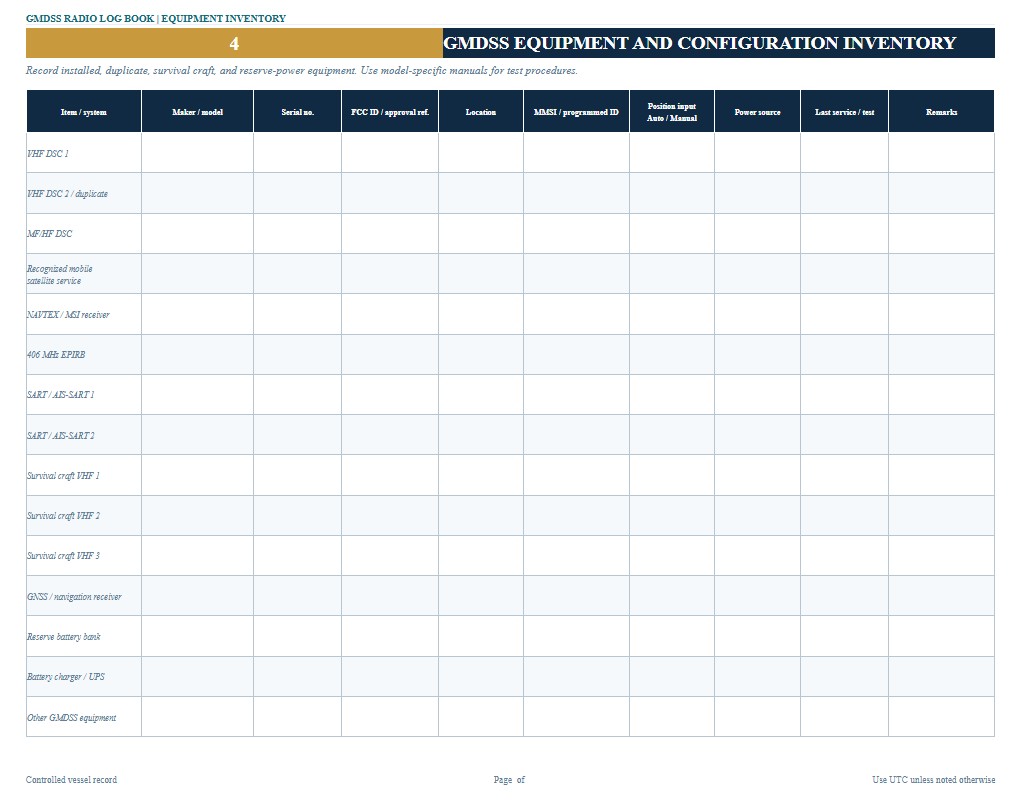
A GMDSS radio log book is used aboard equipped vessels to create a traceable record of distress and safety communications, radio watches, equipment checks, power-source tests, malfunctions, repairs, and inspections. For U.S.-flagged vessels subject to the Global Maritime Distress and Safety System, accurate radio records can help demonstrate compliance with Federal Communications Commission requirements and support inspections conducted by authorized personnel. The log is normally maintained by the GMDSS radio operator, the officer of the navigational watch, or another person designated under the vessel’s operating procedures. This page provides downloadable Word, PDF, and Excel versions of a GMDSS radio log book, together with practical guidance for completing entries, correcting errors, documenting required tests, and retaining records. Because the applicable requirements depend on the vessel, flag, route, sea area, equipment, and regulatory status, the template should be reviewed against current federal rules, vessel procedures, and any applicable international requirements before use.
Download the GMDSS Radio Log Book Word Template
The Word format is useful when the vessel owner, operator, master, or radio officer needs to edit headings, add vessel-specific equipment, change the number of entry rows, or adapt the document to an established safety management system before printing or sharing it.

Download the GMDSS Radio Log Book PDF Template
The PDF format provides a fixed-layout version that is convenient for printing, placing at the radio operating position, sharing with inspectors, or archiving with other vessel records.
Download the GMDSS Radio Log Book Excel Template
The Excel format is suitable for electronic recordkeeping when the operator needs repeatable rows for dates, UTC times, positions, communications, tests, equipment defects, corrective actions, battery readings, inspections, and responsible personnel.
How to Complete and Use This Document
Begin by completing the vessel identification section. Record the vessel name, country of registry, official number, call sign, Maritime Mobile Service Identity number, and any other identifier required by the vessel’s procedures. It may also be helpful to identify the voyage, operating sea area, radio station location, master, and operator responsible for the log. Confirm that identification numbers match the ship station license and the numbers programmed into the GMDSS equipment.
Record Entries in a Consistent Format
Enter each event in chronological order and use Coordinated Universal Time when required by the vessel’s applicable rules and procedures. Each entry should clearly show the date, time, vessel position when relevant, equipment or radio service involved, a concise description of the event, and the name, initials, signature, or electronic identification of the person making the entry. Approved abbreviations may be used when their meanings are explained elsewhere in the log.
Communications entries should summarize distress and urgency traffic affecting the vessel, distress alerts relayed by the vessel, acknowledgments, and communications received from search and rescue authorities. Record inadvertent distress, urgency, or safety transmissions, including how and when the transmission was canceled. Safety communications affecting the vessel may also need to be documented, particularly when conducted on channels other than VHF.
Document Equipment Checks and Tests
Use the log to confirm that pre-departure radio checks were satisfactory and that required publications and operating information were available. Daily records may include the condition and successful testing of the installed GMDSS equipment. At the beginning of a watch, the officer or GMDSS operator should verify that the navigation receiver is operating and supplying current position information to connected alerting equipment. When equipment does not receive position data automatically, record the manual position update.
Weekly entries may cover DSC test communications, portable survival craft radios, search and rescue radar transponders or AIS search and rescue transmitters, and inspection of the EPIRB, as applicable to the vessel’s installation. Reserve batteries or other emergency power sources should be checked at the required intervals. Record voltage, specific gravity for applicable lead-acid batteries, charging information, test results, and any abnormal condition. Battery work should be performed only by trained personnel using appropriate precautions for electrical, chemical, fire, and explosion hazards.
Record Defects, Repairs, and Inspections
Describe any malfunctioning GMDSS equipment and make a separate entry when normal operation is restored. Include the equipment identification, symptoms, operational limitations, person notified, temporary measures, corrective action, technician details, and completion date. Entries should also be made when equipment is exchanged or replaced, when major repairs are completed, and when an annual GMDSS inspection is conducted. When equipment is replaced, verify that the correct MMSI and other ship identifiers have been programmed.
A vessel subject to inspection requirements may need a clearly identifiable section containing the inspection date, the next inspection date, the inspector’s name and FCC license information, results, repairs, certification, and acknowledgment by the owner, operator, or master. Do not use this general template as a substitute for an inspector’s required certification or an official vessel document.
Correct and Retain the Log Properly
Do not erase, obscure, delete, or destroy an original entry during the applicable retention period. For a written log, correct an error by striking through it without making the original text unreadable, adding the correction, and recording the initials and correction date. Electronic systems should preserve the original entry, show the correction, and provide a dated electronic acknowledgment or audit trail.
Federal retention periods can differ according to the entry. FCC rules generally require station logs to be retained for two years, while records related to a distress situation or disaster may require longer retention. Additional periods may apply when an investigation, claim, complaint, inspection, company policy, flag-state rule, or international requirement is involved. Some original entries must remain aboard for a specified period. Before adopting the template, the vessel owner or operator should verify current FCC and Coast Guard requirements, applicable SOLAS obligations, flag-state instructions, classification society guidance, and the vessel’s safety management procedures. Consult a qualified maritime compliance professional, FCC-licensed GMDSS maintainer, or maritime attorney when the vessel’s regulatory status or recordkeeping obligations are uncertain.