
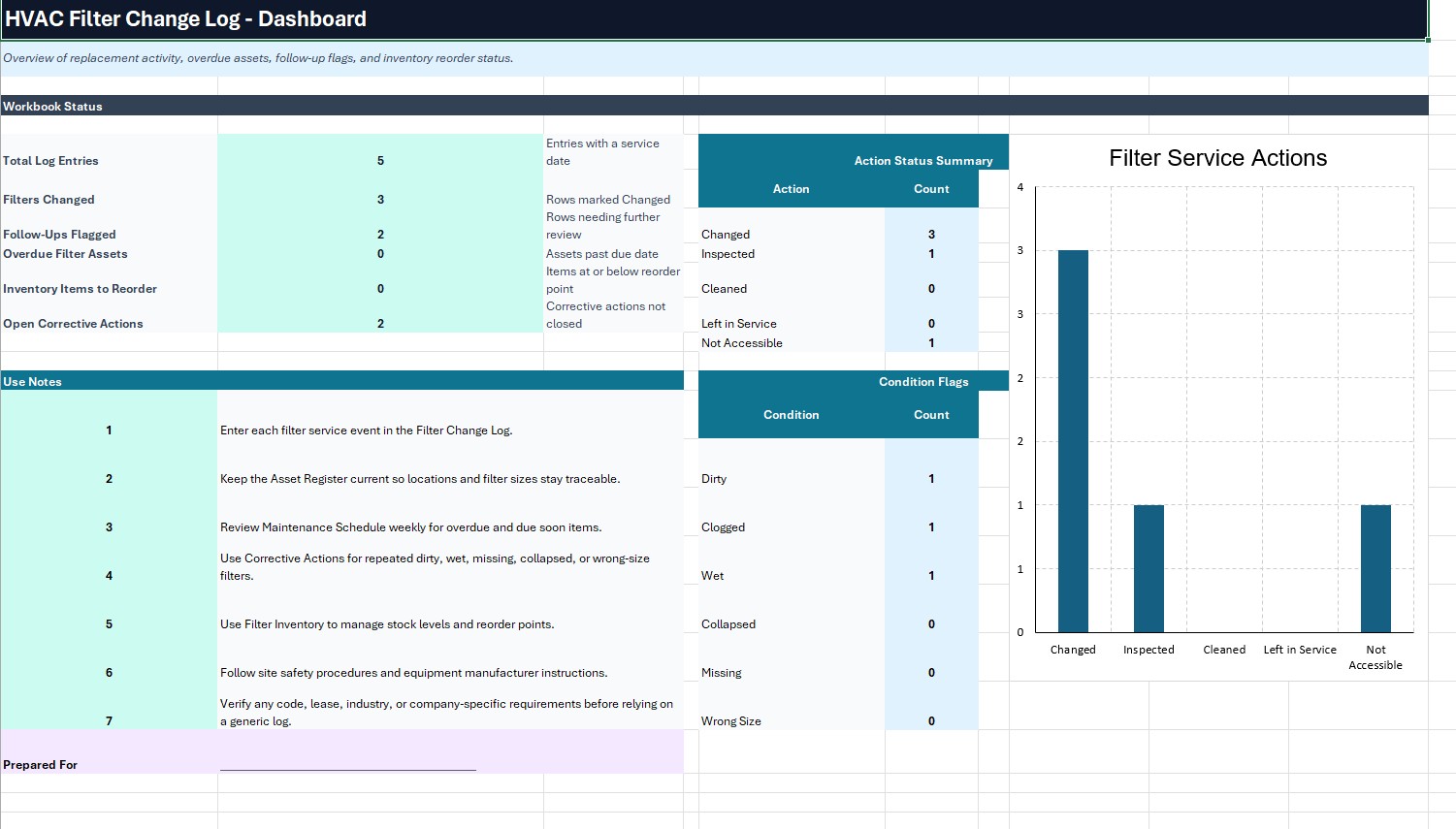
An HVAC filter change log template is a practical maintenance record used to track when air filters are inspected, cleaned, replaced, and documented for heating, ventilation, and air conditioning systems. In the United States, this type of template is commonly used by homeowners, landlords, property managers, facility teams, schools, offices, retail businesses, restaurants, warehouses, and HVAC contractors to support preventive maintenance, indoor air quality practices, equipment care, and recordkeeping. A clear log can help show filter size, MERV rating, filter location, replacement date, technician name, condition notes, next due date, and any follow-up action needed. This page provides downloadable Word, PDF, and Excel versions of the HVAC filter change log template, together with practical guidance for completing and using the document in residential, commercial, rental, and facility maintenance settings.
Download the HVAC Filter Change Log Template Word Template
The Word format is useful when you want to edit the HVAC filter change log template freely before printing, sharing, signing, or adapting it to a specific property, maintenance procedure, tenant file, contractor workflow, or company recordkeeping system.

Download the HVAC Filter Change Log Template PDF Template
The PDF format is useful for printing, posting near equipment rooms, archiving completed records, sharing with property managers, or using a fixed-layout version of the log during routine HVAC filter inspections.
Download the HVAC Filter Change Log Template Excel Template
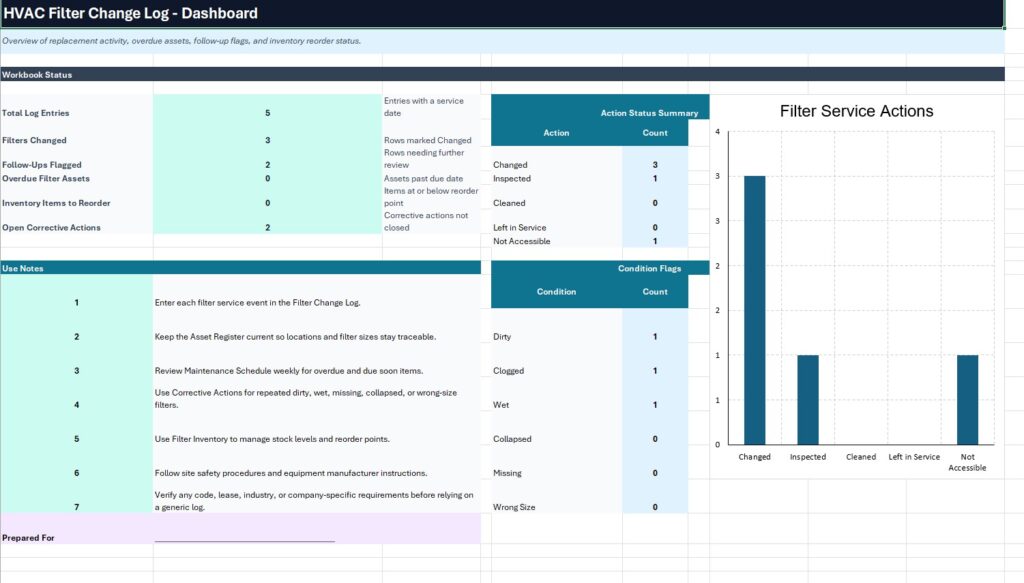
The Excel format is useful when the log contains repeatable rows, multiple HVAC units, filter inventories, replacement dates, next due dates, schedules, locations, technician names, quantities, cost tracking, and recurring maintenance records.
How to Complete and Use This Document
Start the HVAC filter change log template by identifying the property and equipment clearly. Useful fields include property name, street address, building number, unit number, floor, room, mechanical room, rooftop unit number, air handler number, furnace number, heat pump number, or other asset ID. For commercial buildings, schools, restaurants, multifamily properties, and multi-site portfolios, the log should also include the responsible department, facility manager, contractor name, work order number, and the person responsible for reviewing completed entries. Clear identification prevents confusion when a building has several filters in different return grilles, air handlers, rooftop units, or tenant spaces.
Each log entry should record the service date, the person performing the filter check, the filter location, filter size, filter type, MERV rating if known, quantity replaced, and whether the filter was inspected, cleaned, replaced, or left in service. If the filter was not replaced, the person completing the log should state why, such as “filter clean,” “replacement filter not available,” “unit locked,” “equipment offline,” or “access restricted.” This makes the record more useful than a simple checkmark and helps managers identify repeated supply, access, or scheduling problems.
Use the condition notes field to describe what was observed. Common entries include dirty filter, clogged filter, wet filter, collapsed filter, wrong size installed, missing filter, damaged frame, excessive dust, unusual odor, air bypass around filter rack, poor fit, or evidence that the filter had not been seated correctly. If a filter is wet, moldy, repeatedly clogged, or unusually dirty soon after replacement, the issue may require further HVAC inspection rather than another routine filter change. The log should make it easy to flag those exceptions for follow-up.
The next due date is one of the most important fields. Many residential and light commercial systems are checked monthly during heavy heating or cooling periods, and filters are often replaced based on manufacturer recommendations, visible condition, system use, filter type, indoor air quality needs, and building conditions. Some properties may need more frequent changes because of pets, construction dust, high occupancy, restaurant operations, wildfire smoke, poor outdoor air quality, or heavy equipment run time. Other systems with deeper media filters may have a different replacement interval. The log should not assume that one schedule fits every system. Follow the equipment manufacturer, filter manufacturer, facility policy, service agreement, or qualified HVAC professional’s recommendation.
If the template is used for a business, rental property, school, healthcare-related facility, food service location, or regulated workplace, keep the log consistent with company procedures and any applicable maintenance program. Some organizations use filter change records to support indoor air quality practices, warranty files, energy management, tenant response documentation, service contractor oversight, or audit readiness. Requirements may vary by state, county, city, industry, lease, insurance policy, local code authority, employer policy, or facility standard, so the user should verify any specific recordkeeping or maintenance requirements that apply to the property.
Safety should be addressed before anyone changes filters. Depending on the equipment location, filter replacement can involve electrical equipment, moving parts, ladders, rooftop access, mechanical rooms, sharp sheet metal edges, hot surfaces, poor lighting, or restricted areas. Employees and contractors should follow applicable workplace safety procedures, lockout or equipment shutdown procedures when required, and site access rules. A simple filter log is not a substitute for HVAC training, safety training, or manufacturer instructions.
Customize the template when managing more than one unit or location. For a single home, a basic date and filter size record may be enough. For commercial facilities, add columns for asset ID, tenant space, filter bank, quantity used, purchase source, cost, technician signature, supervisor approval, and corrective action required. Keep completed logs with maintenance records, service reports, invoices, warranty documents, and equipment files. When filter problems repeat, when airflow seems restricted, when a higher MERV filter is being considered, or when occupants report comfort or air quality issues, consult a qualified HVAC technician or facility professional before changing filter specifications or operating procedures.