
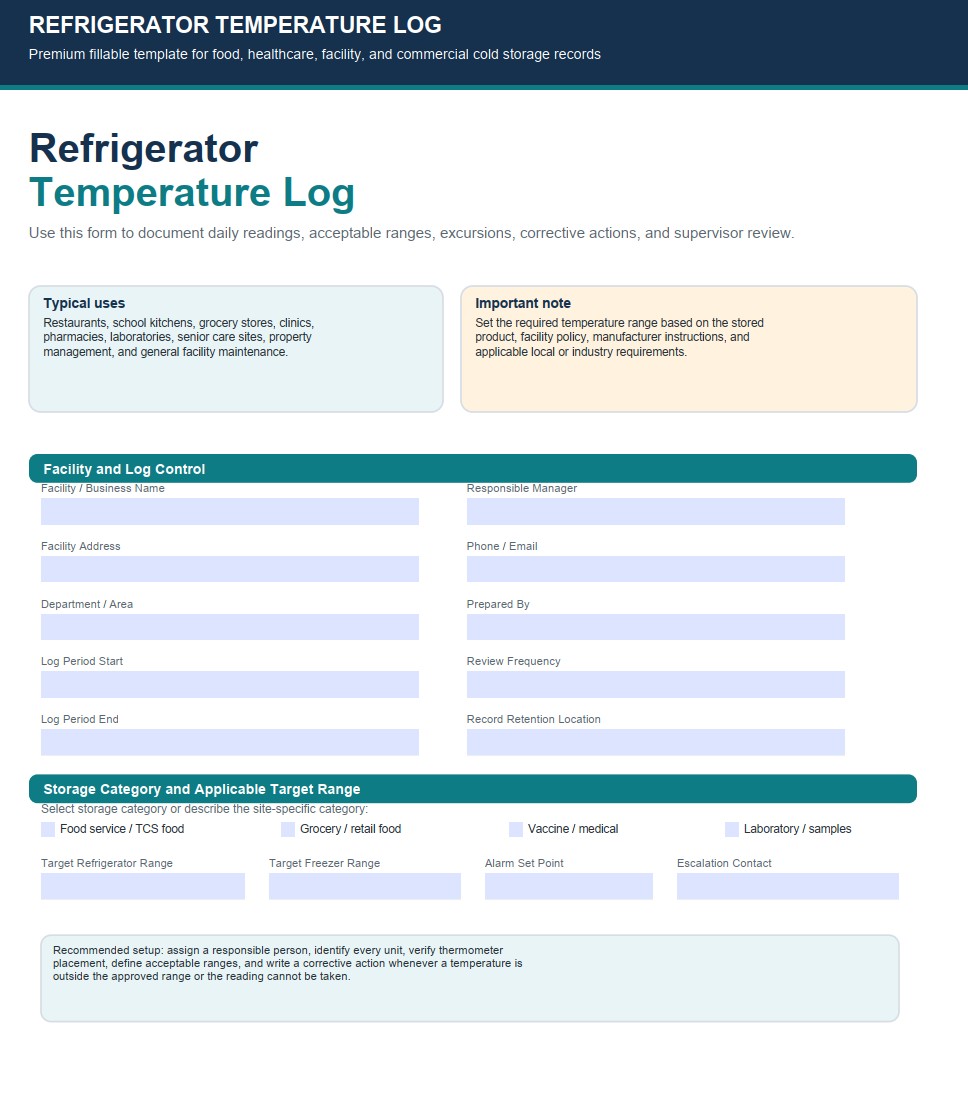
A refrigerator temperature log is a practical record used to document temperature readings for refrigerators, coolers, walk-in units, food storage areas, medical refrigerators, laboratory refrigerators, and other temperature-sensitive storage equipment. In the United States, this type of log is commonly used by restaurants, grocery stores, schools, childcare facilities, healthcare offices, pharmacies, laboratories, senior care facilities, commercial kitchens, landlords, facility managers, and home users who need a consistent record of cold storage conditions. A clear log can help track date, time, unit location, thermometer reading, acceptable temperature range, corrective action, initials, supervisor review, and equipment concerns. This page provides downloadable Word, PDF, and Excel versions of the refrigerator temperature log, together with practical guidance for completing and using the document for food safety, inventory protection, maintenance follow-up, and internal recordkeeping.
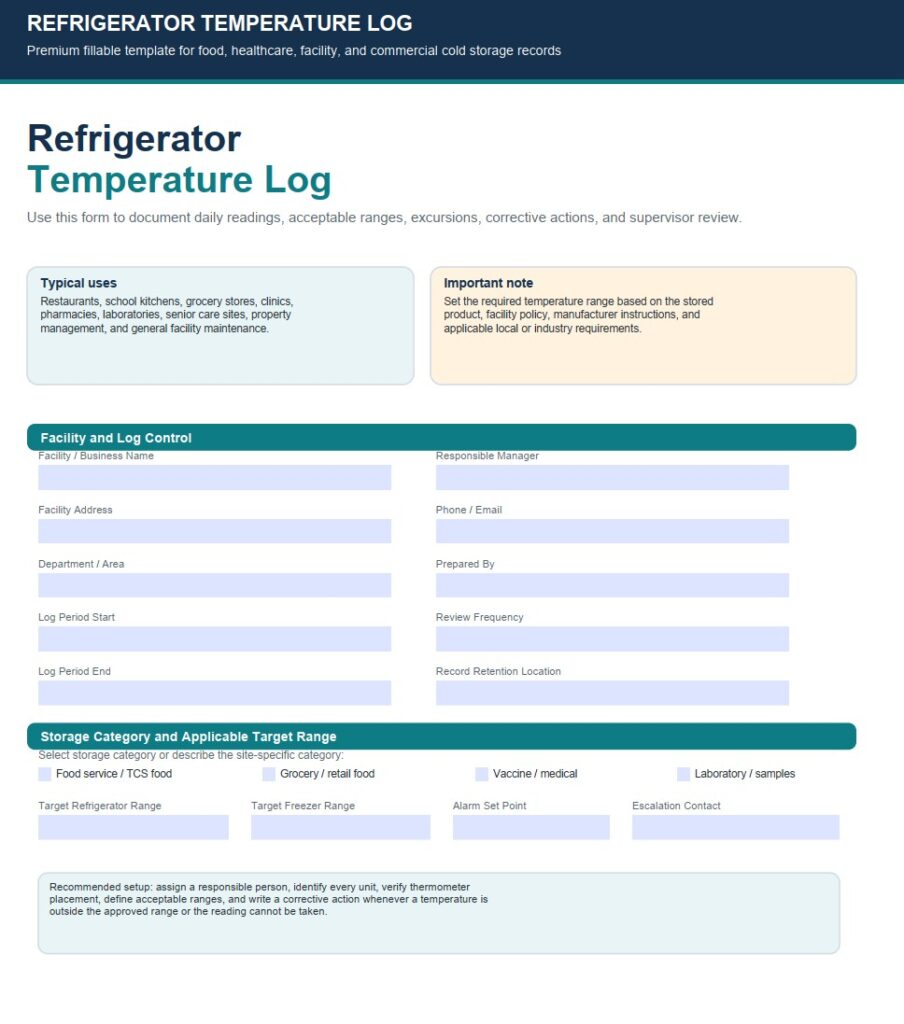
Download the Refrigerator Temperature Log Word Template
The Word format is useful when you want to edit the refrigerator temperature log freely before printing, sharing, signing, or adapting it to a specific business, facility, department, inspection routine, food safety plan, or internal procedure.

Download the Refrigerator Temperature Log PDF Template
The PDF format is useful for printing, posting near a refrigerator or walk-in cooler, archiving completed records, sharing with managers, or using a fixed-layout version for daily temperature checks.
Download the Refrigerator Temperature Log Excel Template
The Excel format is useful when the log contains repeatable rows, multiple refrigerators, dates, time entries, acceptable ranges, follow-up actions, inventory notes, employee initials, supervisor review, recurring schedules, or automatic tracking.
How to Complete and Use This Document
Start the refrigerator temperature log by identifying the facility and the specific unit being monitored. Useful fields include company or facility name, address, department, kitchen, storage room, laboratory, clinic, refrigerator number, walk-in cooler number, asset ID, thermometer ID, and the person responsible for monitoring. If the business has more than one refrigerator, each unit should have a separate log or a clearly separated section. This prevents confusion when readings need to be reviewed later for a health inspection, internal audit, equipment service call, inventory loss review, or supervisor sign-off.
Each entry should include the date, time, actual temperature reading, name or initials of the person taking the reading, and whether the unit is within the acceptable range. For food storage, many U.S. food safety references use 40°F or below for household refrigerator safety, while many retail food and foodservice programs use 41°F or below for cold holding of time and temperature control for safety foods. The correct standard may depend on the setting, local food code, health department rules, product type, and company policy. The log should state the target range that applies to that specific unit instead of leaving employees to guess.
The person completing the log should use a reliable thermometer or temperature monitoring device and follow the facility’s procedure for where and how the reading is taken. Built-in appliance displays can be helpful, but many organizations prefer independent thermometers or data loggers because they provide a more consistent record. If the thermometer has a calibration date, serial number, or verification record, include that information in the template or in a related equipment file. For laboratory, or regulated product storage, use the temperature range required by the product manufacturer, applicable program, or qualified professional. Vaccine storage, for example, often uses a narrower refrigerated range than ordinary food storage.
When a temperature is out of range, the log should not stop at the number. Record the corrective action taken. Examples include closing the door, checking whether the unit was overloaded, moving products to another approved refrigerator, contacting a supervisor, calling a repair technician, checking the gasket, removing blocked airflow, verifying the thermometer, discarding unsafe food when required, or placing affected inventory on hold until a decision is made. For food businesses, decisions about discarding or holding product should follow the applicable food safety plan, health department guidance, company policy, and the nature of the food involved.
Use a supervisor review section when the log is part of a business or institutional recordkeeping process. A manager, kitchen lead, facility supervisor, pharmacist, laboratory manager, school food service director, or other responsible person may need to review entries, confirm that out-of-range readings were addressed, and sign or initial the log. Inconsistent entries, missing times, repeated high readings, unexplained corrections, or frequent equipment alarms should be investigated rather than treated as routine paperwork.
Customize the template to match the risk level of the items stored. A restaurant cooler may need fields for food category, shift, corrective action, and health inspection readiness. A school kitchen may need daily opening and closing checks. A pharmacy, clinic, or laboratory may need fields for minimum and maximum temperatures, alarm checks, product lot numbers, excursion documentation, and responsible personnel. A property manager may need only unit location, reading, maintenance issue, and tenant notification. Requirements can vary by state, county, city, industry, licensing program, health department, employer policy, grant program, insurer, or accreditation body, so users should verify the current rules that apply to their setting.
Keep completed logs in an organized recordkeeping system. Store them with food safety records, maintenance reports, calibration records, repair invoices, inventory loss reports, incident records, or compliance files as appropriate. If readings show recurring problems, do not simply adjust the template. Have the equipment evaluated by a qualified technician or responsible professional. A refrigerator temperature log is useful evidence of monitoring, but it does not replace proper equipment maintenance, product-specific storage instructions, food safety training, or professional judgment when temperature-sensitive items may have been compromised.