
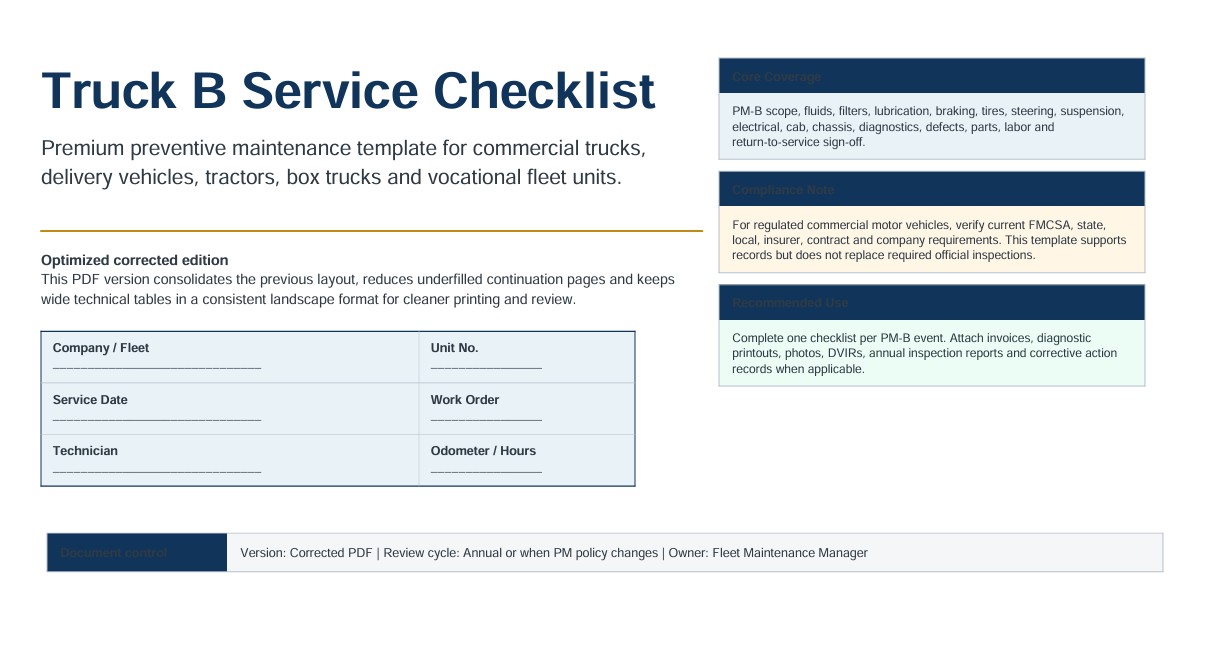
A Truck B Service checklist is a preventive maintenance form used to document a more detailed truck service interval than a basic daily or light PM inspection. In U.S. fleet operations, a B Service checklist is commonly used for commercial trucks, delivery trucks, tractors, box trucks, vocational trucks, and work trucks that need scheduled maintenance based on mileage, engine hours, time in service, manufacturer guidance, and company policy. The checklist helps record vehicle identification, odometer reading, engine hours, fluids, filters, lubrication, brakes, tires, steering, suspension, lights, safety equipment, undercarriage items, defects, corrective actions, parts used, technician notes, and approval signatures. This page provides downloadable Word, PDF, and Excel versions of the Truck B Service checklist, together with practical guidance for completing, customizing, printing, archiving, and using the document as part of a structured maintenance and recordkeeping program.
Download the Truck B Service Checklist Word Template
The Word format is useful when you want to edit the Truck B Service checklist freely before printing, sharing, signing, or adapting it to a specific fleet, vehicle class, shop procedure, contractor service agreement, or internal maintenance policy.

Download the Truck B Service Checklist PDF Template
The PDF format is useful for printing, archiving, keeping in a vehicle maintenance file, sharing with technicians, or using a fixed-layout version during scheduled preventive maintenance work.
Download the Truck B Service Checklist Excel Template
The Excel format is useful when the checklist contains repeatable service rows, mileage intervals, engine hours, parts used, labor time, cost tracking, scheduled dates, defect follow-up, vendor records, and automatic next-service calculations.
How to Complete and Use This Document
Start the Truck B Service checklist by completing the vehicle and service identification section. Include the company name, fleet number, unit number, license plate, state, VIN, year, make, model, truck type, fuel type, odometer reading, engine hours, service date, service location, work order number, technician name, driver name, and next scheduled service target. For commercial vehicles, this identification is important because inspection, repair, and maintenance records must be traceable to the correct vehicle. If the truck is part of a regulated fleet, leased fleet, municipal fleet, contractor fleet, or customer-dedicated account, also include the asset ID, department, cost center, and vendor or shop name.
A B Service checklist should be more detailed than a quick pre-trip or visual walkaround. In many fleet programs, B Service includes items from a lighter inspection plus deeper preventive maintenance tasks such as engine oil and filter service, fuel filter checks or replacement, air filter inspection, lubrication, chassis inspection, battery and charging system review, fluid level checks, leak inspection, belt and hose inspection, brake inspection, tire inspection, steering and suspension checks, lights, safety equipment, exhaust system, driveline, fifth wheel or hitch components, cargo body, liftgate, and undercarriage review. The exact scope should be matched to the manufacturer’s maintenance schedule, vehicle age, duty cycle, fuel type, warranty terms, and company maintenance program.
Use measurable entries whenever possible. Record oil type and quantity, filter part numbers, coolant condition, brake lining condition, tire tread depth, tire pressure, battery test results, fluid levels, torque checks where required, and whether any leaks were found. A checklist that only says “OK” is much less useful than one that records the condition observed and the action taken. If the template includes checkboxes such as pass, fail, serviced, replaced, not applicable, and follow-up required, make sure the technician uses them consistently and adds written notes for any item marked fail or follow-up required.
The defects and corrective action section is one of the most important parts of the form. If a technician finds a problem, describe it clearly, identify the affected component, record whether the truck was repaired immediately, and state whether the vehicle is safe to return to service. Examples of useful entries include “right rear outer tire tread below company limit,” “oil leak at valve cover,” “brake light inoperative,” “front spring hanger worn,” “coolant hose soft and swollen,” or “liftgate hydraulic seepage.” Add the parts used, labor hours, invoice number, repair date, and final approval. Open defects should not be left without an assigned follow-up person and target date.
For trucks subject to Federal Motor Carrier Safety Administration requirements, the user should verify the current inspection, repair, maintenance, periodic inspection, driver inspection, and record retention rules that apply to the operation. Federal requirements may depend on vehicle weight, interstate or intrastate use, passenger or cargo operations, hazardous materials, motor carrier status, and other facts. State law, insurance policies, customer contracts, union procedures, municipal rules, and company safety policies may add additional requirements. A Truck B Service checklist can support maintenance documentation, but it does not replace required official inspection forms or the judgment of a qualified inspector or mechanic.
Safety controls should be addressed before work begins. Truck B Service may require working around raised vehicles, hot engine components, electrical systems, compressed air systems, hydraulic systems, fuel systems, moving parts, shop lifts, jacks, and heavy components. The checklist should provide space to confirm wheel chocking, proper lifting and support, personal protective equipment, lockout or energy control when applicable, spill control, ventilation, and safe handling of oils, fuels, coolants, batteries, and used filters. If shop employees are performing the work, company safety procedures and applicable OSHA requirements should be followed.
Customize the checklist for the truck’s configuration. A tractor should include fifth wheel, air lines, glad hands, trailer connections, and coupling components. A box truck may need roll-up door, cargo lighting, liftgate, dock bumpers, and body seals. A dump truck should include hydraulic system, PTO, dump body, hoist, tarp, tailgate, and frame checks. A refrigerated truck should include refrigeration unit service, temperature controls, door gaskets, and fuel or power supply for the unit. Keep completed Truck B Service checklists with work orders, repair invoices, parts receipts, warranty records, annual inspection reports, driver reports, and fleet maintenance files. For regulatory compliance, serious mechanical defects, warranty disputes, accident-related issues, tax treatment of repairs, or fleet policy design, consult a qualified mechanic, fleet compliance professional, attorney, CPA, insurer, or the relevant federal, state, county, or city authority.