
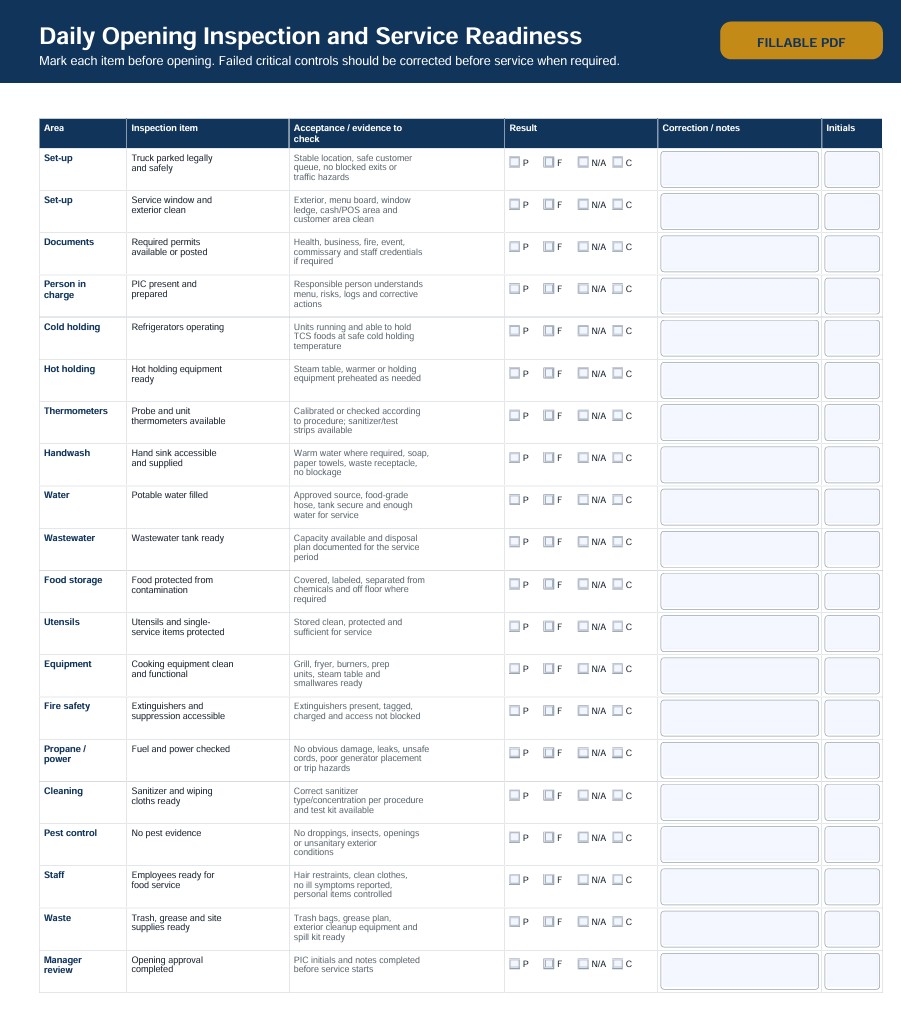
A food truck inspection checklist is a practical form used by mobile food vendors, operators, managers, employees, commissary kitchens, event organizers, and local inspection teams to review the food safety, sanitation, fire safety, equipment, and operational readiness of a food truck before service. In the United States, food trucks are typically subject to local health department rules, state food codes, fire department requirements, business licensing, and site-specific event or property rules. A checklist helps document refrigeration, hot holding, handwashing, potable water, wastewater, food storage, employee hygiene, cooking equipment, propane, ventilation, fire extinguishers, cleaning, pest control, permits, corrective actions, and responsible persons. This page provides downloadable Word, PDF, and Excel versions of the food truck inspection checklist, together with practical guidance for completing, customizing, printing, archiving, and using the document as part of a safer and more consistent mobile food operation.
Download the Food Truck Inspection Checklist Word Template
The Word format is useful when you want to edit the food truck inspection checklist freely before printing, sharing, signing, or adapting it to a specific truck, menu, local inspection process, event requirement, commissary procedure, or company policy.

Download the Food Truck Inspection Checklist PDF Template
The PDF format is useful for printing, archiving, keeping inside the vehicle, sharing with staff, or using a fixed-layout version during daily pre-service checks, health inspections, fire inspections, and event setup reviews.
Download the Food Truck Inspection Checklist Excel Template
The Excel format is useful when the checklist contains repeatable rows, temperature logs, corrective action records, equipment lists, permit dates, inspection schedules, employee assignments, inventory items, maintenance notes, and automatic follow-up tracking.
How to Complete and Use This Document
Start the food truck inspection checklist by entering the business and vehicle identification details. Include the legal business name, trade name, truck number, license plate, VIN if used internally, permit number, commissary name, operator name, person in charge, inspection date, service location, event name, menu type, and planned service hours. If the truck operates in multiple cities or counties, add the jurisdiction where the inspection is being performed because mobile food requirements can change from one local health department or fire authority to another.
Complete the food safety portion before service begins. Record whether refrigeration units are operating, whether thermometers are available, whether cold time and temperature control for safety foods are held at 41°F or below, and whether hot holding equipment is capable of maintaining foods at 135°F or above when applicable. Check that raw animal foods, ready-to-eat foods, produce, ice, beverages, and single-service items are stored to prevent contamination. The form should also include fields for food source verification, date marking where required, allergen awareness, sanitizer concentration, wiping cloth storage, warewashing setup, and whether food-contact surfaces are clean and in good repair.
Pay close attention to handwashing, water, and wastewater. A food truck inspection checklist should verify that the handwashing sink is accessible, supplied with warm running water where required, soap, paper towels, and a waste container. The potable water tank should be filled from an approved source, and hoses or connections should be suitable for potable water use. The wastewater tank should have enough capacity for the planned service period and should be emptied only in an approved manner. If the truck relies on a commissary, document whether food preparation, storage, water filling, wastewater disposal, cleaning, and equipment servicing are performed there as required by the applicable authority.
The equipment section should cover cooking appliances, refrigeration, hot holding, generators, electrical connections, ventilation, hood filters, lighting, floors, walls, ceilings, counters, service windows, doors, screens, and pest prevention. Note whether each item is clean, functional, and safe to use. If an item fails inspection, record the defect, corrective action, responsible person, completion date, and whether the truck may continue operating. Vague notes such as “equipment issue” are less useful than specific entries such as “prep refrigerator at 48°F,” “hand sink blocked by storage bin,” “sanitizer test strips missing,” or “hood filter has heavy grease buildup.”
Fire and life safety checks are also important for food trucks, especially units with propane, cooking oil, fryers, grills, generators, electrical panels, or open-flame cooking. The checklist should include propane cylinder condition, gas line condition, leak concerns, emergency shutoff access, generator placement, extension cord condition, ventilation, hood suppression system status, fire extinguisher presence, inspection tags, and staff knowledge of emergency procedures. Fire extinguisher type, suppression system requirements, cooking equipment clearance, and propane storage rules may vary by local fire code, event rule, insurer, or authority having jurisdiction, so the operator should verify current requirements before operating.
Use the employee and operations section to confirm that the person in charge is present when required, food handler cards or manager certifications are current if required locally, employees are not working while ill, hair restraints are used, gloves and utensils are available where needed, and personal items are stored away from food and equipment. The checklist can also track posted permits, menu limitations, restroom access, route sheets, site permission, trash disposal, grease disposal, and event-specific requirements. Do not assume that a general template replaces official inspection forms. Many U.S. cities, counties, and states require specific applications, plan reviews, inspections, mobile vending permits, fire permits, commissary agreements, or route approvals.
Customize the checklist for the type of operation. A coffee truck may need espresso machine cleaning, milk temperature logs, and water filtration checks. A taco truck may need separate sections for raw meats, hot holding, salsa refrigeration, and tortilla storage. A truck with fryers should add oil handling, hood cleaning, grease disposal, and Class K extinguisher checks if required. A truck serving at festivals may need extra sections for temporary power, crowd placement, overnight storage, and vendor documentation. Keep completed checklists with temperature logs, maintenance records, receipts, commissary records, inspection reports, employee training records, permits, insurance documents, and corrective action logs. For uncertain food safety, fire safety, licensing, employment, tax, insurance, or regulatory questions, consult the local health department, fire marshal, qualified food safety professional, attorney, CPA, insurer, or other appropriate authority.