
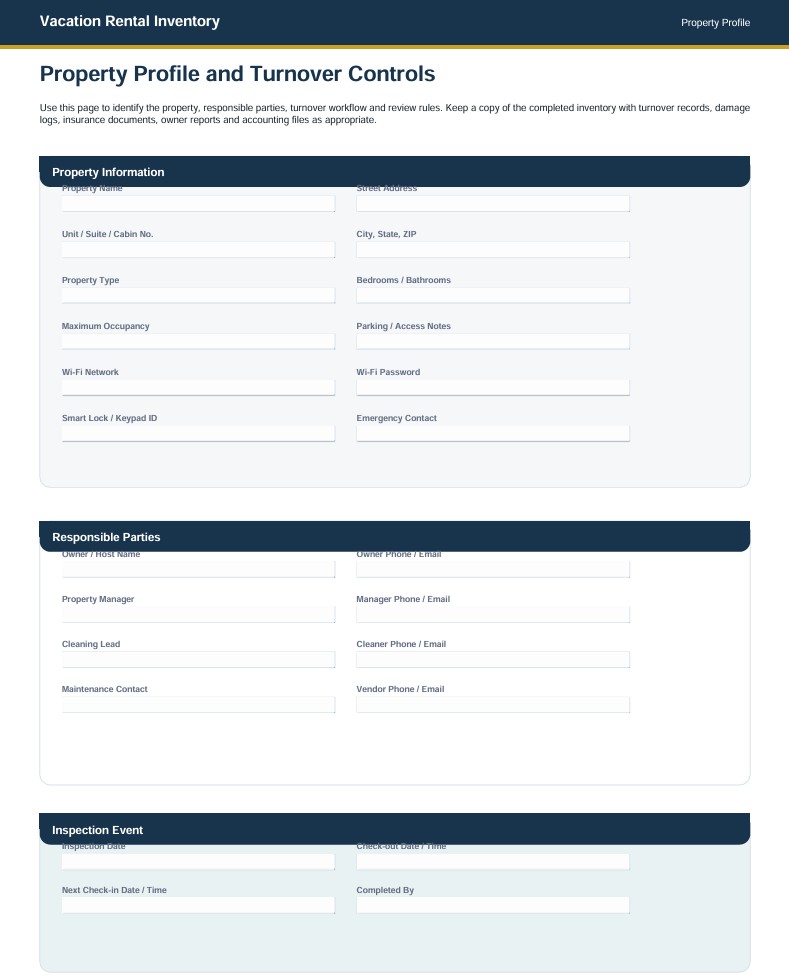
A vacation rental inventory checklist is a practical record used by short-term rental owners, hosts, property managers, cleaners, and maintenance teams to document the items provided inside a rental property and verify their condition between guest stays. In the United States, this type of checklist is commonly used for Airbnb-style rentals, beach houses, cabins, condos, guest suites, furnished apartments, and professionally managed vacation homes. It helps track furniture, kitchenware, linens, towels, appliances, electronics, cleaning supplies, safety equipment, outdoor amenities, replacement items, and damage notes. A clear inventory record can support turnover inspections, guest-ready preparation, owner reporting, insurance documentation, tax and expense tracking, and dispute prevention. This page provides downloadable Word, PDF, and Excel versions of the vacation rental inventory checklist, together with practical guidance for completing, customizing, printing, archiving, and using the document as part of a reliable short term rental management process.
Download the Vacation Rental Inventory Checklist Word Template
The Word format is useful when you want to edit the vacation rental inventory checklist freely before printing, sharing, signing, or adapting it to a specific property, management procedure, owner file, cleaning workflow, or guest turnover process.

Download the Vacation Rental Inventory Checklist PDF Template
The PDF format is useful for printing, archiving, posting in a supply closet, sharing with cleaning staff, or using a fixed-layout version during inspections before and after guest stays.
Download the Vacation Rental Inventory Checklist Excel Template
The Excel format is useful when the checklist contains repeatable rows, item quantities, replacement costs, purchase dates, room-by-room lists, supply levels, damage logs, restocking notes, vendor details, and multi property inventory tracking.
How to Complete and Use This Document
Start the vacation rental inventory checklist by entering the basic property information. Include the property name, street address, unit number, listing nickname, owner name, property manager, cleaning company, inspection date, check-in date, check-out date, and the person completing the checklist. If the host manages several properties, add an internal property ID, listing platform reference, lockbox or access note, and room names that match the property layout. A precise identification section helps avoid confusion when cleaning teams, maintenance staff, co-hosts, or owners review the checklist later.
Complete the inventory room by room. Common sections include entryway, living room, dining area, kitchen, pantry, bedrooms, bathrooms, laundry area, closets, garage, patio, pool area, grill area, game room, office area, and storage spaces. For each item, record the item name, quantity expected, quantity found, condition, location, replacement cost if known, purchase date or warranty note, and whether restocking or repair is required. Examples include sofas, tables, lamps, televisions, remote controls, cookware, dishes, glasses, utensils, coffee makers, small appliances, bedding, pillows, mattress protectors, towels, shower curtains, hair dryers, irons, hangers, cleaning supplies, paper goods, batteries, light bulbs, and guest amenities.
Use consistent condition categories so the record is easy to interpret. Suitable options may include new, good, worn, damaged, missing, needs cleaning, needs replacement, or not applicable. Avoid vague notes such as “bad” or “issue.” A more useful entry would say “two wine glasses missing,” “remote control battery cover cracked,” “queen fitted sheet stained,” “patio chair frame bent,” or “toaster not heating.” Detailed notes help determine whether the issue should be charged to a guest, handled as normal wear and tear, reported to the owner, or added to the next maintenance visit.
Photos can strengthen the checklist. When an item is expensive, frequently disputed, or easily damaged, such as furniture, electronics, artwork, appliances, rugs, grills, pool equipment, baby gear, or outdoor furniture, record whether a photo was taken and where it is stored. Before-and-after photos are especially useful during turnovers, owner inspections, insurance claims, platform disputes, and repair documentation. The checklist should not rely only on photos, however. Written quantities, condition notes, and dates make the record easier to search and compare over time.
Include safety-related inventory items, but do not treat the checklist as a substitute for legal compliance. A vacation rental inventory checklist may track smoke alarms, carbon monoxide alarms, fire extinguishers, first aid kits, flashlights, exterior lighting, door locks, pool gates, railings, stair lighting, child safety items, emergency contact cards, and posted instructions. Requirements for short-term rentals can vary widely by state, county, city, fire marshal, building department, homeowners association, insurance policy, and platform rules. Hosts should verify current local requirements for permits, occupancy limits, safety equipment, taxes, accessibility, parking, trash rules, pool safety, and guest disclosures before relying on a generic checklist.
The checklist should also support restocking and expense tracking. Add columns for reorder level, supplier, item cost, last purchased date, and whether the item is owner-supplied, host-supplied, or cleaner-supplied. This is helpful for consumables such as toilet paper, paper towels, soap, shampoo, coffee, trash bags, dishwasher detergent, laundry detergent, batteries, light bulbs, sponges, and cleaning products. If the property is operated as a business or rental activity, keep receipts and inventory records with accounting files. Tax treatment of supplies, repairs, improvements, furnishings, and depreciation can be fact-specific, so a CPA or tax professional should be consulted for tax questions.
Customize the template based on the property type and guest expectations. A luxury beach house may need separate sections for outdoor furniture, beach gear, pool equipment, grill tools, smart home devices, and high-value decor. A mountain cabin may need fireplace tools, snow removal items, board games, extra blankets, and emergency supplies. A city apartment may focus on linens, small appliances, access devices, parking passes, and building rules. Keep completed checklists with turnover records, maintenance logs, guest incident reports, owner statements, insurance documents, and vendor invoices. For recurring theft, damage disputes, injury concerns, safety equipment issues, or local compliance questions, consult a qualified attorney, insurer, property manager, tax professional, local authority, or short-term rental compliance specialist before relying on the template alone.