
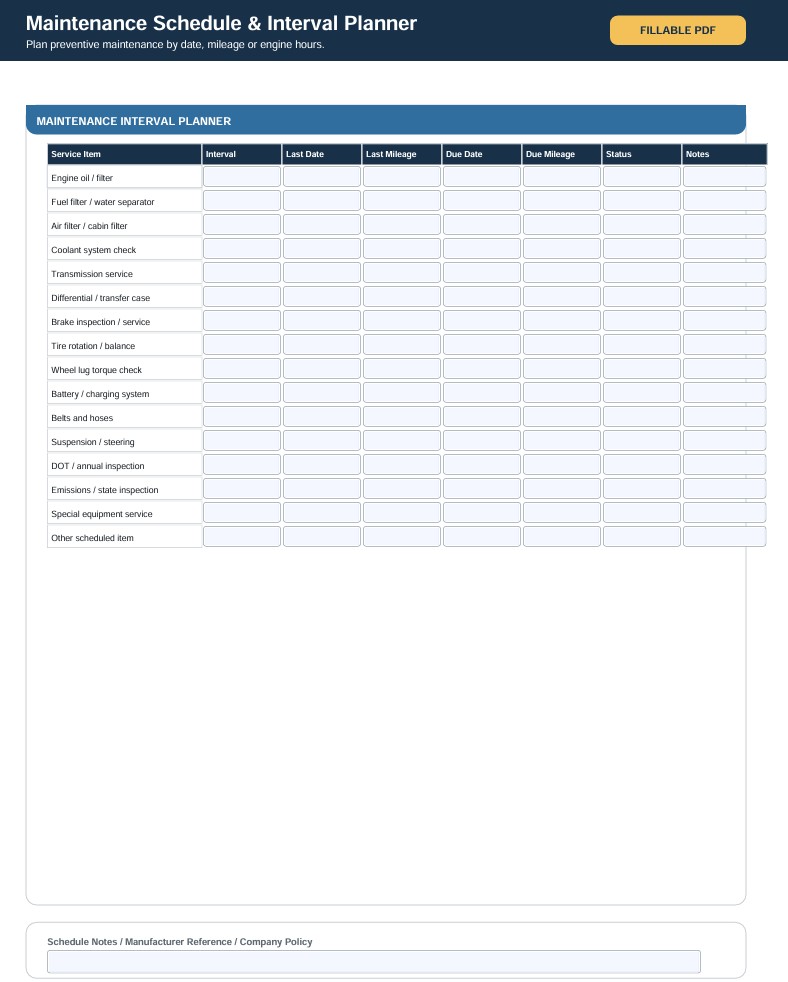
A truck maintenance checklist is a practical form used to inspect, service, and document the condition of pickup trucks, box trucks, delivery trucks, work trucks, fleet vehicles, and commercial motor vehicles. In the United States, this type of checklist is commonly used by owner-operators, fleet managers, contractors, delivery companies, maintenance shops, small businesses, farms, municipal departments, and individuals who want a consistent record of preventive maintenance and repair needs. The template helps track vehicle identification, mileage, service dates, tires, brakes, lights, fluids, steering, suspension, battery, belts, hoses, safety equipment, defects, corrective actions, technician notes, and approval signatures. This page provides downloadable Word, PDF, and Excel versions of the truck maintenance checklist, together with practical guidance for completing, customizing, printing, archiving, and using the document as part of a reliable vehicle maintenance and recordkeeping process.
Download the Truck Maintenance Checklist Word Template
The Word format is useful when you want to edit the truck maintenance checklist freely before printing, sharing, signing, or adapting it to a specific vehicle, fleet procedure, repair shop workflow, company policy, or maintenance schedule.

Download the Truck Maintenance Checklist PDF Template
The PDF format is useful for printing, archiving, keeping inside a vehicle file, sharing with drivers or mechanics, or using a fixed-layout version during routine truck inspections and service visits.
Download the Truck Maintenance Checklist Excel Template
The Excel format is useful when the checklist contains repeatable rows, mileage intervals, service dates, repair logs, fleet lists, odometer readings, parts inventory, labor costs, dollar amounts, vendor records, or automatic next-service tracking.
How to Complete and Use This Document
Start the truck maintenance checklist by entering clear vehicle identification data. Important fields usually include company name, vehicle number, license plate, state, VIN, year, make, model, unit type, fuel type, odometer reading, engine hours if used, assigned driver, department, service location, inspection date, and the person completing the checklist. For commercial trucks, fleet vehicles, or vehicles used across several jobsites, this information is essential because maintenance records must be tied to the correct vehicle and date. If the truck is leased, rented, or assigned to a customer account, include the lease number, asset ID, or work order number as well.
The checklist should separate routine inspection items from actual maintenance work performed. Inspection items may include tires, tread depth, tire pressure, wheels, lug nuts, brakes, brake lines, parking brake, steering, suspension, shocks, springs, lights, turn signals, brake lights, reflectors, mirrors, horn, windshield, wipers, washer fluid, seat belts, battery, belts, hoses, coolant, engine oil, transmission fluid, power steering fluid, brake fluid, fuel system, exhaust, leaks, frame condition, coupling devices, cargo securement points, liftgate, trailer connections, and emergency equipment. Maintenance work may include oil changes, filter replacement, tire rotation, brake service, battery replacement, alignment, lubrication, fluid top-off, diagnostic checks, or replacement of worn parts.
Record measurements whenever possible. Instead of writing only “tires checked,” include tread depth, tire pressure, tire position, and whether uneven wear was observed. Instead of writing “fluids OK,” record whether oil, coolant, brake fluid, transmission fluid, power steering fluid, and washer fluid were checked, topped off, or found leaking. For brakes, steering, suspension, and safety-critical systems, the checklist should allow space for technician findings and whether the truck is safe to operate, needs service soon, or should be removed from service until repaired.
Use the corrective action section carefully. If a defect is found, describe the issue, the action taken, the parts used, the technician or vendor, the date completed, and whether the truck was returned to service. For example, “left rear tire below tread limit,” “right brake light inoperative,” “coolant leak at hose connection,” or “excessive play in steering” is more useful than a vague note such as “needs repair.” If a problem is not fixed immediately, assign a responsible person and follow-up date so the issue does not disappear from the maintenance record.
For trucks used in interstate commerce or otherwise subject to Federal Motor Carrier Safety Administration rules, the user should verify applicable inspection, repair, maintenance, Driver Vehicle Inspection Report, annual inspection, and record retention requirements. Federal rules can apply differently depending on vehicle weight, use, cargo, passenger operations, hazardous materials, and motor carrier status. State law, local rules, insurance requirements, company policy, and customer contracts may also impose additional inspection or documentation requirements. A general checklist can support compliance, but it does not determine whether a specific truck is regulated.
Safety procedures should be followed before maintenance begins. Truck maintenance can involve moving parts, hot surfaces, electrical systems, raised vehicles, pressurized fluids, heavy components, shop equipment, and hazardous materials. Employees and mechanics should use appropriate personal protective equipment, follow shop procedures, support raised vehicles properly, control hazardous energy when required, and avoid performing work beyond their training. If a defect affects brakes, steering, tires, lights, suspension, coupling equipment, or any other safety-critical system, a qualified mechanic or responsible professional should evaluate the vehicle before it is operated.
Customize the checklist to match the truck type and use. A pickup used by a contractor may need sections for tool storage, ladder racks, trailer hitch, and jobsite safety equipment. A box truck may need liftgate, roll-up door, cargo area, dock bumper, and interior lighting checks. A dump truck may need hydraulic system, bed operation, tarp, tailgate, PTO, and body inspection fields. A refrigerated truck may need temperature unit checks and related service logs. Keep completed checklists with repair invoices, inspection reports, work orders, parts receipts, warranty records, registration documents, and fleet maintenance files. For regulatory questions, serious defects, accidents, warranty disputes, tax treatment of repairs, or fleet compliance programs, consult a qualified mechanic, fleet compliance professional, attorney, CPA, insurer, or the relevant federal, state, county, or city authority.